
Main Courses
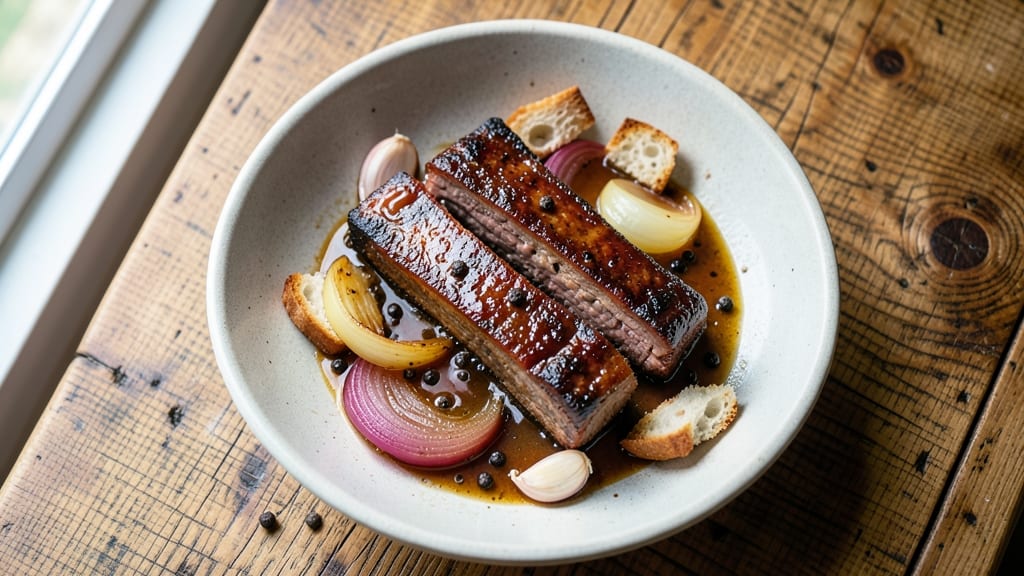
Beef chuck short ribs prepared Flanken style deliver the kind of deep, caramelized richness that transforms weeknight dinners into restaurant-worthy feasts. This German-inspired technique combines a mustard-marinated crust with slow braising—creating tender meat that falls apart at the touch while developing layers of flavor from beer, onions, and aromatic spices.
I perfected this method after years of experimenting with braising techniques, and it consistently delivers results that impress even the most discerning palates.
The beauty of Flanken-style ribs lies in their balance of texture and flavor: a crisp, mustard-encrusted exterior that gives way to fork-tender meat inside.
Unlike traditional pot roasts, these ribs benefit from a two-stage cooking process—first searing to develop that flavorful crust, then slow braising to render fat and deepen the sauce.
The result is a dish that's equally at home on a Sunday supper table or a holiday spread, with a sauce rich enough to spoon directly over the ribs.
What makes this recipe particularly rewarding is how the flavors develop over time. The mustard marinade not only adds a tangy depth but also helps create that signature crust when seared.
As the ribs braise, they absorb the aromatic blend of onions, garlic, and spices, while the beer-based sauce reduces to a velvety consistency that clings to every bite. The final result is a dish that's both comforting and sophisticated—exactly the kind of meal that makes cooking worth the effort.
Whether you're serving this to family or hosting a dinner party, these Flanken-style ribs will be the centerpiece. The technique scales beautifully, and the leftovers reheat just as well as the first serving. Let's get started on creating this German-inspired masterpiece that will have everyone asking for seconds.
Ingredients for beef chuck short rib flanken style
German-inspired ingredients that deliver restaurant-quality flavor with a mustard-encrusted, beer-braised finish.
| Ingredient | Amount | Notes |
|---|---|---|
| Beef Chuck Short Ribs 🥩 | 3 lb | Bone-in, 1-1.5 inch thick cuts |
| Yellow Onions 🧅 | 2 whole | Medium size, peeled and halved |
| Garlic Cloves 🧄 | 6 cloves | Fresh, peeled and smashed |
| Dijon Mustard 🍯 | ¼ cup | High-quality, smooth variety |
| Dry Beer 🍺 | 2 cups | German lager or pilsner preferred |
| Beef Broth 💧 | 1 ½ cups | Low-sodium preferred |
| Tomato Paste 🍅 | 2 tbsp | Smooth, no sugar added |
| Carrots 🥕 | 3 whole | Medium size, peeled and chopped |
| Celery Stalks 🌿 | 3 whole | Trimmed and chopped |
| Bay Leaves 🍃 | 2 whole | Fresh preferred |
| Thyme Sprigs 🌿 | 4 whole | Fresh, stems removed |
| Black Peppercorns 🌶️ | 1 tsp | Freshly cracked |
| Salt 🧂 | 1 ½ tsp | Kosher or sea salt |
| Olive Oil 🫒 | 2 tbsp | Extra-virgin for searing |
The beef chuck short ribs are the foundation—look for cuts with good marbling and about 1-1.5 inches of meat on the bone. Costco or local butchers often carry these pre-cut, which saves time. If buying whole, ask for the ribs to be cut into 1-1.5 inch sections. The Dijon mustard should be high-quality; brands like Maille or Amora work perfectly. For the beer, German lagers like Beck's or Warsteiner add authentic depth, but any dry beer will do. The carrots and celery should be fresh—bright orange and crisp for the carrots, tight stalks for the celery.
No German beer on hand? Any dry lager or even a light ale works—just avoid overly bitter or sweet beers. Short on fresh thyme? Dried thyme at one-third the amount is fine, but fresh has a brighter flavor. The tomato paste can be from a tube or can, but avoid the watery kind—look for thick, smooth varieties. For the mustard marinade, if you don’t have Dijon, whole-grain mustard thinned with a splash of beer works in a pinch. The key is balancing the tang—don’t skimp on the mustard, or the crust won’t form properly.
The ribs can be marinated overnight, but even 2-3 hours makes a difference. Store raw ribs in the coldest part of your fridge, wrapped tightly in plastic. The marinade keeps for 3 days in the fridge, and the braised ribs reheat beautifully—350°F for 20-30 minutes until warmed through. The sauce thickens as it cools, so if it seems too thin after reheating, simmer uncovered for 5 minutes. Leftovers keep for 4-5 days in the fridge or 3 months frozen.
Why You'll Love This Recipe
- One-Pan Magic: I swear by this recipe when I’m too tired to clean up. Sear the ribs, toss in sliced onions and garlic, add a splash of beer and mustard, then let the oven do the work—no flipping, no fussing, just hands-off perfection.
- Beer-Braised Bliss: That deep, malty richness from the beer cuts through the richness of the chuck ribs while the Dijon mustard adds a tangy kick. Honestly, the first bite makes me close my eyes—it’s that good.
- Leftovers That Don’t Suck: Unlike so many braised dishes, these ribs taste even better the next day. I’ll be real: I’ve reheated them three times and still crave them. Perfect for meal prep when you’re too busy to cook twice.
- Budget-Friendly Feast: Chuck ribs are cheaper than fancy cuts, and a bottle of beer stretches further than you’d think. Between us, this recipe feeds four for under $20—and everyone’s happy. (Yes, even on a Tuesday night.)
Step-by-step instructions for braised German-style short ribs
This method delivers melt-in-your-mouth tenderness with a rich, mustard-infused sauce every time.
Create the Mustard Marinade and Sear the Ribs
In a small bowl, whisk together the 0.25 cup Dijon mustard, 1.5 tsp salt, and 1 tsp freshly cracked black peppercorns until fully combined. This marinade will form the flavor base and help tenderize the tough chuck ribs. Pat the 3 lb beef chuck short ribs dry with paper towels—this ensures maximum crust formation during searing.
Heat a large Dutch oven over medium-high heat until hot. Add the 2 tbsp olive oil and swirl to coat the bottom evenly. Working in batches to avoid crowding, sear the ribs on all sides for 3-4 minutes per side until deeply browned. You're looking for a rich, caramelized crust that develops a slight resistance when pressed—this is your signal they're ready. Transfer the seared ribs to a plate and set aside.
Build the Flavor Base with Aromatics
In the same Dutch oven, add the chopped 3 whole carrots and 3 whole celery stalks. Cook for 5 minutes, stirring occasionally, until they begin to soften slightly. Add the 6 smashed garlic cloves and cook for another 30 seconds until fragrant—this releases their sweet, pungent oils that will infuse the entire dish.
Push the vegetables to one side of the pot and add the peeled and halved 2 whole yellow onions. Cook for 3-4 minutes until they begin to caramelize at the edges. Here's the thing—don't stir constantly. Let them develop those beautiful brown spots that add depth of flavor. When the onions are nicely softened and beginning to color, add the 2 tbsp tomato paste and stir to combine. Cook for 1 minute to toast the paste slightly, deepening its umami character.
Deglaze and Braise with Beer and Broth
Pour in the 2 cups dry beer, scraping up all the browned bits from the bottom of the pot with a wooden spoon. This deglazing step captures all the concentrated flavors that would otherwise burn. Let the beer simmer for 3-4 minutes until reduced by about half, then add the 1.5 cups beef broth, the 2 whole bay leaves, and the 4 whole thyme sprigs. Stir once to combine, then return the seared ribs to the pot, bone-side down.
Bring the liquid to a gentle simmer, then reduce heat to low. Here's where patience pays off—cover the pot and let it cook for 2.5 to 3 hours. You'll know it's ready when the ribs are fork-tender and pull away from the bone easily. The sauce should have thickened into a glossy, rich consistency that coats the back of a spoon. If it reduces too quickly, add a splash of water or broth to maintain moisture.
Finish and Rest for Maximum Tenderness
Once the ribs are tender, remove them from the pot and transfer to a serving platter. Tent loosely with aluminum foil and let rest for 10 minutes. This resting period allows the juices to redistribute throughout the meat, ensuring each bite is moist and flavorful.
Return the sauce to a gentle simmer over medium heat and reduce it by about one-third, stirring occasionally. This intensifies the flavors and creates a thicker sauce that clings beautifully to the ribs. Taste and adjust seasoning with additional salt if needed. Serve the ribs with the reduced sauce spooned over the top, accompanied by the braised vegetables from the pot.
Pro Tips For Making Beef Chuck Short Rib Flanken Style
- SEAR IN TWO BATCHES: I learned this the hard way—trying to sear short ribs in one go just clogs your pan and steams them instead of browning. Split the ribs into two batches, let the pan cool slightly between each, and you’ll get that deep, caramelized crust without a fight.
- CUT ONIONS THIN AND LONG: Slice those yellow onions paper-thin and in long strips—they’ll caramelize faster and blend into the sauce better than chunks. Skip the dice, or you’ll end up with a soup instead of a glossy, oniony glaze.
- DON’T SKIP THE BEER REDUCTION: After deglazing with beer, let it reduce by half before adding the mustard. That extra step cuts the alcohol bite and thickens the sauce, making it cling to the ribs instead of pooling at the bottom.
- USE COLD MUSTARD: Mix the Dijon into the beer after it’s simmered, not before. Cold mustard keeps the sauce from curdling, and adding it at the end lets the flavors meld without turning the whole thing into a weird, grainy mess.
Make-ahead tips for this beef chuck short rib flanken style
Marinade Prep Ahead
The mustard marinade can be made up to 3 days ahead and stored in an airtight container in the fridge. I like to prep it the night before so the ribs can absorb the flavors overnight.
Just whisk together the ¼ cup Dijon mustard, 1½ tsp salt, and 1 tsp black pepper, then store it in a sealed jar. When ready to use, simply coat the ribs and let them sit for at least 2 hours before searing. 💪
Rib Prep Timeline
Pat the ribs dry and apply the marinade 2-3 hours before cooking for optimal flavor penetration. If you're short on time, even 1 hour makes a noticeable difference. I recommend using a meat thermometer to check for doneness—aim for an internal temperature of 195°F for perfect tenderness.
The marinade keeps the meat moist during the long braise. 🌡️
Braising Prep Shortcut
Chop all your vegetables—carrots, celery, and onions—the night before and store them in a sealed container in the fridge. This saves 15-20 minutes on prep day.
When ready to cook, simply toss them into the Dutch oven after searing. The onions caramelize beautifully while the ribs braise, adding natural sweetness to the sauce. 🍯
Sauce Reduction Timing
After removing the ribs, reduce the sauce by one-third over medium heat for 10-15 minutes. This step intensifies the flavors and creates a glossy finish. For best results, use a heavy-bottomed saucepan to prevent scorching.
If the sauce reduces too quickly, add 1-2 tbsp of the braising liquid to maintain consistency. 🔥
Leftovers Strategy
Store leftover ribs and sauce in airtight containers for up to 5 days in the fridge. Reheat gently in a skillet over low heat with a splash of water or broth to maintain moisture.
For freezing, portion the sauce separately and freeze it for up to 3 months—thaw and reheat before adding back to the ribs. The flavors actually improve after reheating! ❄️
Make-Ahead Serving
If you're planning a meal for a large group, braise the ribs completely 1 day ahead and refrigerate. Reheat in the oven at 350°F for 20-30 minutes**, covered with foil, until warmed through.
The sauce will thicken further, making it even more flavorful. This method ensures perfect results with minimal last-minute effort. 💡
Nutrition facts
Frequently asked questions
What makes Flanken-style ribs different from traditional pot roast?
Flanken-style ribs focus on creating a crisp mustard-encrusted exterior while keeping the meat tender inside. Unlike pot roast, this method uses a two-stage process: searing first for crust development, then slow braising to render fat and deepen flavors. The beer-based sauce also adds a distinct tangy richness that sets it apart from classic roasts.
Can I substitute the beer with another liquid?
Yes! Use 1 cup beef broth + 1 cup apple cider for a non-alcoholic version, or 1½ cups beef broth + ½ cup red wine for added depth. Avoid sweet liquids like soda or juice—they'll overpower the dish. The key is maintaining a balance of acidity and richness in the braising liquid.
How do I know when the ribs are fully tender?
Use two methods: a meat thermometer (aim for 195°F internal temp) or the fork test. Press gently with a fork—the meat should separate easily from the bone. If it resists, braise 30-60 more minutes. The sauce should also thicken noticeably as the meat renders its fat.
What's the best way to reheat leftover ribs?
Reheat in a 350°F oven for 20-30 minutes covered with foil, then uncover for the last 5 minutes to thicken the sauce. For stovetop, use low heat with a splash of water or broth to prevent drying. Never microwave—it makes the sauce watery and ruins the texture.
Can I use bone-in or boneless ribs for this recipe?
This recipe is designed for bone-in chuck short ribs (1-1.5" thick), as the bone adds flavor and structure. For boneless, reduce braising time to 2 hours and use ½ inch thinner cuts. Bone-in ribs develop more flavor during braising, while boneless versions cook faster but may lack the same depth.