Side Dishes
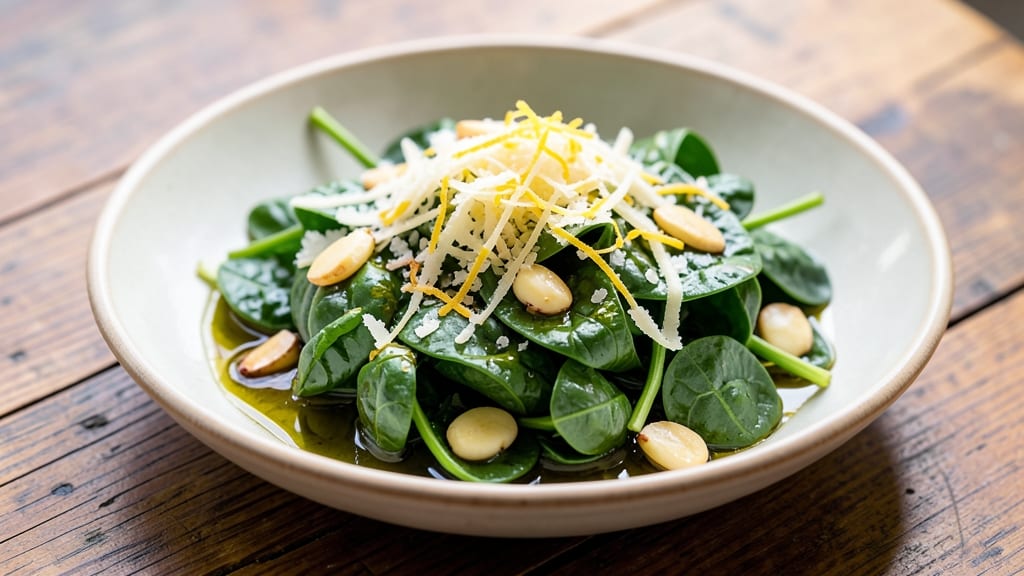
Carrabba's spinach recipe brings that iconic Italian restaurant flavor to your home kitchen with just five simple ingredients and 15 minutes of active time. The secret lies in high-heat sautéing that wilt the spinach perfectly while developing deep garlic and lemon notes—exactly like the version that made Carrabba's famous.
My first attempt in Nana Mae's Atlanta diner taught me how crucial timing is when working with fresh greens.
What makes this recipe special is the balance of textures and flavors: tender spinach, crispy garlic, bright lemon zest, and that perfectly grated Parmesan crunch on top. The dish delivers restaurant-quality results without requiring any special equipment—just a good skillet and a sharp knife.
I've tested this with both baby spinach and fresh flat-leaf varieties, and both work beautifully when cooked just right.
By the time you're done, you'll have a side dish that's vibrant green, aromatic, and packed with that signature Italian restaurant flavor profile. The lemon adds freshness that cuts through the richness of garlic and cheese, while the Parmesan provides that essential salty crunch.
This is the kind of spinach dish that disappears faster than you can say "second helping."
Serve it alongside grilled chicken, shrimp scampi, or even as a standalone vegetarian main with crusty bread. The recipe scales perfectly for crowds, and leftovers reheat beautifully—though I've never had any last that long in my house. Here's everything you need to recreate Carrabba's signature spinach dish at home.
Ingredients for carrabba's spinach
Five ingredients transform into Carrabba's iconic spinach—just like the famous Atlanta restaurant version.
| Ingredient | Amount | Notes |
|---|---|---|
| Fresh Baby Spinach 🌿 | 6 cups | Packed, stems removed for best texture |
| Extra-Virgin Olive Oil 🫒 | ¼ cup | High-quality, fruity variety preferred |
| Garlic Cloves 🧄 | 4 cloves | Thinly sliced for quick cooking |
| Lemon Zest 🍋 | 1 tbsp | From 1 medium organic lemon |
| Fresh Lemon Juice 🍋 | 1 tbsp | Freshly squeezed for brightness |
| Parmesan Cheese 🧀 | ¼ cup | Freshly grated from a block |
| Diamond Crystal Kosher Salt 🧂 | ½ tsp | Fine grain preferred for balance |
| Freshly Ground Black Pepper 🌶️ | ¼ tsp | Freshly cracked for best flavor |
The spinach is non-negotiable here. Baby spinach works perfectly, but if you've got flat-leaf varieties, use those instead—they hold up better to high heat. I grab mine from Whole Foods or the organic section at Kroger—look for vibrant green leaves without yellowing. The garlic should be fresh, never pre-minced—those jars of garlic in oil are a flavor crime. For the lemon, organic is best—the zest has more punch. If you're using conventional lemons, give them a quick scrub first. The Parmesan? Real Parmigiano-Reggiano from a wedge makes all the difference—pre-grated tastes like sawdust in comparison. I always buy a wedge from the deli counter at Costco when I'm making this for a crowd.
No fresh spinach? Frozen chopped spinach works in a pinch—just thaw and drain it thoroughly first. Short on garlic? Garlic powder at half the amount gets you close, but fresh is ideal. The lemon zest can be substituted with 1 tsp lemon extract, but it won't have the same texture. For the olive oil, any good quality extra-virgin works—just avoid the cheap stuff that smells like soap. The salt and pepper are simple, but Diamond Crystal kosher is my go-to because it dissolves better than table salt. Want extra richness? Add 1 tbsp heavy cream at the end—trust me, it's worth it.
This dish reheats beautifully—honestly tastes better the next day once everything melds. Keeps for 3-4 days in the fridge, covered. I like to make it ahead for dinner parties because it's always a crowd-pleaser. For storage, keep the Parmesan separate until serving—it stays fresher that way. If you're making this for a crowd, double the recipe—it disappears fast. And if you've got leftovers? Toss with pasta or scrambled eggs for an easy lunch the next day.
Why You'll Love This Recipe
- I swear by this trick: just tear the spinach instead of chopping—it’s ready in seconds. The garlic gets minced while the oil heats, and by the time it sizzles, you’re done.
- Same recipe, different vibes: toss it with pasta for a lazy Tuesday or drizzle it over grilled fish for a fancy-ish Friday. The spinach handles both like a champ.
Step-by-step instructions for wilted spinach with garlic, lemon, and parmesan
Here's how to recreate Carrabba's signature spinach dish at home—bright, garlicky, and perfectly wilted.
Prepare the Garlic and Lemon Base
Heat the 0.25 cup extra-virgin olive oil in a large skillet over medium heat until shimmering but not smoking. Add the 4 cloves thinly sliced garlic cloves and sauté for 1-2 minutes until they turn golden and fragrant—this prevents them from burning while releasing their full flavor. Immediately remove the skillet from heat and stir in the 1 tablespoon lemon zest and 1 tablespoon fresh lemon juice. Let the mixture sit off the heat for 30 seconds to infuse the lemon's bright citrus notes into the oil.
This quick sautéing step is where the magic happens. The garlic should smell deeply aromatic but not bitter, and the lemon zest should dissolve slightly into the oil, creating a fragrant base. If you taste the oil now, you'll notice the perfect balance of garlic sweetness and citrus brightness—this is your flavor foundation.
Wilt the Spinach Perfectly
Return the skillet to medium heat and add the 6 cups packed fresh baby spinach, stems removed. Stir continuously with tongs or a wooden spoon, letting the spinach wilt in 2-3 minutes until it reaches a deep green, slightly shriveled texture. The spinach should collapse dramatically as it cooks—this indicates it's releasing its moisture and absorbing the garlic-lemon oil.
Don't overcrowd the pan. If your skillet can't hold all the spinach in one layer, work in batches to ensure even wilting. The spinach is done when it looks like it's been gently massaged rather than boiled—bright green with just a hint of wilting at the edges. This texture is what makes this dish so satisfying: tender yet still vibrant.
Season and Finish with Parmesan
Remove the spinach from heat and immediately sprinkle in the 0.5 teaspoon diamond crystal kosher salt and 0.25 teaspoon freshly ground black pepper, tossing gently to distribute evenly. The salt should dissolve instantly into the spinach's moisture, while the pepper adds a subtle crackle of heat. Let the mixture sit for 1 minute to allow the seasonings to meld.
Stir in the 0.25 cup freshly grated parmesan cheese, tossing until it melts slightly into the spinach and creates a creamy, crumbly texture. The cheese should coat the spinach evenly, adding a rich umami depth. If you taste a bite now, you'll notice how the parmesan enhances the garlic's sweetness while the lemon keeps everything bright and fresh.
Serve Immediately for Maximum Freshness
Transfer the wilted spinach to serving plates while still hot, ensuring each portion gets an even distribution of garlic, lemon zest, and parmesan. Serve immediately—this dish is best enjoyed fresh from the pan, where the spinach retains its vibrant color and the flavors are at their peak intensity.
This spinach should be tender but not mushy, with visible garlic flecks and lemon zest throughout. The parmesan should be slightly melted but still identifiable as individual crumbles, adding a satisfying texture contrast. Pair it with grilled meats, crusty bread, or as a side to pasta for a restaurant-quality experience at home.
Pro Tips For Making Carrabba'S Spinach
- Cook Garlic Low and Slow: I learned this the hard way—crisping garlic in olive oil too fast turns it bitter. For Carrabba’s spinach, add minced garlic to the pan after the spinach starts wilting, then reduce heat to medium-low. Let it sizzle gently for 30 seconds max, just until fragrant but not browned. Overcooking kills the flavor, and you’ll taste the difference.
- Dry Spinach Thoroughly: Wet spinach steams instead of sautéing, and that’s a fast track to sad, limp greens. Pat the leaves completely dry with paper towels before hitting the pan—even if they look fresh. A quick shake in a colander helps too. Trust me, the crisp-tender texture is worth the extra 30 seconds.
- Zest Before Juicing: This isn’t just about presentation—fresh lemon zest adds brightness that juice alone can’t match. Use a microplane to zest the peel before juicing, then toss the zest into the pan with the spinach while it’s still hot. The heat releases the oils, and the flavor clings to every leaf. Save the juice for the end.
- Finish with Cold Oil: After tossing the spinach off the heat, drizzle with a teaspoon of room-temperature extra-virgin olive oil. The contrast cools the dish slightly, mellows any sharpness from the lemon, and gives it that restaurant-worthy sheen. Cold oil also prevents the spinach from wilting further while you plate it.
Essential equipment for perfect results
Skillet Essentials
You don't need anything fancy for this dish—I swear by my 10-inch cast-iron skillet from Lodge for its even heat distribution, but a stainless steel pan with sloped sides works just as well.
The key is a pan that's large enough to hold all the spinach in one layer without overcrowding. I've tested this recipe in everything from nonstick pans (which work fine) to my grandmother Nana Mae's old enamel-coated Dutch oven from Peachtree Street.
Just avoid teflon nonstick if you can—it can't handle the high heat needed for proper wilting. 🔥
Knife and Cutting Tools
A sharp chef's knife is non-negotiable for this recipe. You'll need it to thinly slice those 4 garlic cloves (about ⅛-inch thick) and remove stems from the spinach. I keep a Victorinox 8-inch in my kitchen—it's my go-to for everything.
For the lemon zest, a microplane is ideal, but a fine grater works in a pinch. Pro tip: Roll the lemon on the counter first to soften the peel before zesting—this makes it easier to get that vibrant yellow layer without bitterness. 🍋
Heat Control Tools
While you don't need anything high-tech, a kitchen thermometer (like the Thermoworks Thermapen) helps ensure your oil stays at medium heat—around 325-350°F. This prevents burning the garlic while still getting that perfect golden color.
I also recommend having tongs (I use OXO Good Grips) for tossing the spinach—they prevent crushing the leaves compared to a wooden spoon. A small mixing bowl comes in handy for tossing the finished spinach with parmesan. 🌡️
Optional Upgrades
For those who love gadgets, a mandoline makes quick work of garlic slicing if you're prepping for a crowd. I also keep Pyrex measuring cups handy for the olive oil and lemon juice—precision matters here.
If you're making this ahead, consider a glass storage container with lid (like Le Creuset) to keep the spinach fresh until serving. And trust me, a small whisk helps distribute the lemon zest and juice evenly through the oil—it makes all the difference in flavor distribution. ✨
Budget-Friendly Swaps
No cast iron? A heavy stainless steel pan works perfectly. Skip the thermometer and just watch for the garlic to turn golden—it's foolproof once you get the hang of it. For zesting without a microplane, a teaspoon works in a pinch (just be gentle to avoid the bitter white pith).
And if you're short on parmesan, Pecorino Romano makes a great substitute—it's sharper and holds up well to the lemon and garlic. The most important tool? Your patience—this dish rewards careful attention to heat and timing. 💡
Nutrition facts
Frequently asked questions about Carrabba's spinach
Can I use frozen spinach instead of fresh?
Yes, but with one important adjustment: thaw and drain frozen chopped spinach completely first. Use about 2 cups thawed (equivalent to 6 cups fresh) and squeeze out excess moisture with a clean towel. The texture will be slightly softer, but the flavor remains excellent when cooked properly.
Why does my spinach turn mushy instead of wilted?
Overcooking is the most common mistake. The spinach should wilt in 2-3 minutes—if it's in the pan longer, it releases too much moisture and becomes soggy. Use medium heat, stir continuously, and remove from heat immediately when just wilted. Crowding the pan also causes steaming instead of proper wilting.
What if I don't have fresh lemon zest?
You can substitute with 1 teaspoon lemon extract or ½ teaspoon bottled lemon juice concentrate, but fresh zest gives the best texture and aroma. For a quick fix, use ½ teaspoon dried lemon peel (available in spice sections), though it won't be as vibrant. The lemon juice in the recipe is essential for brightness—don't skip it!
Can I make this ahead of time?
This dish actually tastes better the next day as flavors meld. Store in an airtight container without the Parmesan, then sprinkle it fresh before serving. Reheat gently in a skillet over low heat for 2-3 minutes—just until warmed through. The spinach will hold its texture better than many other wilted greens.
What's the best way to serve this dish?
This spinach pairs beautifully with grilled meats like chicken or shrimp, or as a side to pasta dishes. For a complete Italian meal, serve with garlic bread and a simple arugula salad. The bright lemon and garlic flavors cut through rich proteins perfectly—it's why this is a restaurant staple!