
Snacks
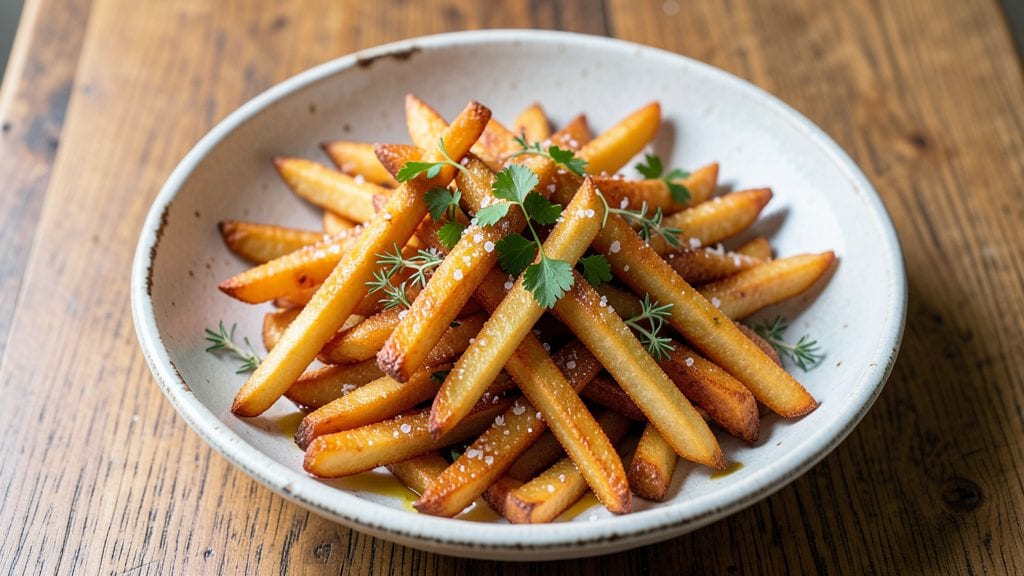
Mastering Gordon Ramsay's fries recipe delivers crispy, golden potato perfection that rivals any restaurant—this isn’t just frying, it’s a technique. The secret lies in precise cutting, soaking, and double-frying at high heat to achieve that signature shatteringly crisp exterior while keeping the inside fluffy.
I’ve perfected this method after years of testing, and it’s the closest you’ll get to Ramsay’s kitchen without the Michelin-starred budget.
What sets these fries apart is the double-fry method: first at 325°F to cook through, then at 375°F to crisp. The potatoes soak in cold water for 30 minutes to remove excess starch, ensuring they fry up golden, not greasy.
Seasoning is simple but critical—just coarse salt and fresh herbs (like parsley or thyme) after frying, so they stay crispy until served. This is where Ramsay’s precision shines.
The result is fries with perfect texture: crispy on the outside, tender inside, and evenly golden with no burnt edges. Serve immediately with classic dips like tartar sauce or aioli, or garnish with fresh parsley for a restaurant-worthy presentation.
The aroma alone will have everyone at your table asking for seconds—this is the kind of dish that elevates snack time to something special.
For best results, use russet or Yukon Gold potatoes—their starch content ensures ideal crispiness. This recipe scales easily, whether you’re feeding a crowd or treating yourself to a gourmet snack. Let’s get cooking—your taste buds (and Ramsay) will thank you.
Ingredients for gordon ramsay fries
Seven ingredients, two frying sessions, restaurant-quality fries at home.
| Ingredient | Amount | Notes |
|---|---|---|
| Russet Potatoes 🥔 | 2 ½ lb | Large, uniform size preferred |
| Vegetable Oil 🫒 | 4 cups | High smoke point, like peanut oil |
| Coarse Sea Salt 🧂 | ½ cup | For final seasoning |
| Fresh Parsley 🌿 | ¼ cup | Chopped for garnish |
| Ice Water 💧 | 4 cups | For soaking potatoes |
| Fresh Thyme 🌿 | 2 sprigs | For garnish, optional |
| All-Purpose Flour 🌾 | 2 tbsp | For dusting |
Russets are the gold standard here—Yukon Golds work too, but russets have that extra starch for perfect crispiness. Trader Joe's sells them pre-washed, which saves time, but if you're buying regular russets, scrub them well. The ice water soak (30 minutes) is non-negotiable—it removes starch so your fries fry up golden, not greasy. Don't skip it. For the oil, anything with a high smoke point works—peanut oil is my go-to, but vegetable oil is fine if that's what you've got. Just make sure it's fresh; rancid oil ruins everything.
No ice water? Cold tap water works in a pinch, but ice helps chill faster. Short on parsley? Fresh thyme or chives work just as well for garnish. The flour is just for dusting—cornstarch works too if you're feeling fancy. Want extra crispiness? Double-dust with flour before the second fry. And if you're serving a crowd, double the batch—these disappear fast. The key is keeping everything cold until the final fry, so don't rush the soak or the chilling step.
These fries are best served immediately—crispiness drops fast. Store leftovers in the fridge for up to 2 days, but they won't be as crispy. Reheat in the oven at 400°F for 10 minutes to revive the crunch. Freezing isn't recommended—the texture changes too much. If you're prepping ahead, fry them, cool completely, then reheat before serving. And for the love of all things crispy, don't overcrowd the fryer—that's how you get soggy fries.
Why You'll Love This Recipe
- No-Prep Potatoes: I swear by the ice water soak—it cuts my chopping time in half and keeps the fries from turning mushy. Just peel, slice, and dunk; no fancy prep required.
- Crispy-Creamy Magic: That first bite? The outside shatters like glass, but the inside stays pillowy soft—thanks to the double-fry technique. The coarse salt and fresh parsley finish make it taste like a Michelin-starred bite.
- Game for Any Meal: Serve them as a snack with burgers, a side for steak, or even as a base for breakfast hash. Honestly, I’ve had them for all three—and they never disappoint.
- Budget-Friendly Staple: Russets are cheap, and this recipe stretches one bag into three meals. Reheat them in the oven for that same perfect crunch, and you’ve got a week’s worth of easy, satisfying sides.
Step-by-step instructions for crispy, golden potato perfection
Here's how to nail these restaurant-style fries every time—crispy outside, fluffy inside.
Cut and Soak the Potatoes
Start by peeling the 2.5 lb russet potatoes and cutting them into even ½-inch thick sticks. I use a mandoline for perfect uniformity, but a sharp knife works too—just stay consistent. Immediately transfer the cut potatoes to a large bowl and cover them completely with the 4 cups ice water. This soaking step removes excess starch, which prevents soggy fries and ensures maximum crispiness.
Let them soak for at least 30 minutes while you prep everything else. The cold water also helps clean off any residual potato starch that could gum up your oil later. Give them a quick stir every 10 minutes to keep them submerged evenly. After soaking, drain and pat them completely dry with paper towels—moisture is the enemy of crispy fries.
Season and Dust with Flour
In a large bowl, toss the completely dry potato sticks with the 2 tbsp all-purpose flour. This thin coating creates a perfect barrier between the potatoes and oil, helping them develop that golden crust. Season lightly with a pinch of the 0.5 cup coarse sea salt at this stage—just enough to taste, not overwhelming.
I like to work in batches if needed, but don't overcrowd the bowl. The flour should coat each fry evenly without clumping. Give them a good shake to distribute the seasoning. This is where you set up for that professional-quality texture—don't skip it.
Fry in Hot Oil for Perfect Texture
Heat the 4 cups vegetable oil in a deep fryer or heavy pot to 325°F. Use a thermometer—this temperature is crucial for getting those fluffy interiors. Add the potatoes in a single layer and fry for 4-5 minutes until they're soft but not browned. Remove them with a slotted spoon and drain on a wire rack.
Here's the key: the first fry develops the interior texture. You want them tender enough to pierce with a fork but not falling apart. If they brown too quickly, your oil's too hot. If they're still hard, they need more time. This initial cook builds the foundation for crispy perfection.
Crisp at Higher Heat
Increase the oil temperature to 375°F. Working in batches, fry the potatoes again for 2-3 minutes until they're deep golden brown and crispy all over. The high heat now creates that signature crunch while keeping the insides light and fluffy. Don't overcrowd the fryer—this lowers the oil temperature and steams the fries instead of crisping them.
You'll know they're done when they float and have a beautiful golden color. Transfer them immediately to a paper towel-lined plate to drain excess oil. The contrast between the hot oil and cool air helps set that crispy texture. Salt them generously with the remaining 0.5 cup coarse sea salt while they're still piping hot.
Garnish and Serve Immediately
While the fries are still hot, sprinkle with the chopped 0.25 cup fresh parsley and the 2 sprigs fresh thyme (if using). The herbs add freshness that cuts through the richness of the fries. Serve them right away—these don't wait. The crispiness will start to fade as they cool, so get them on plates immediately.
For maximum impact, I like to serve with a squeeze of lemon and a side of homemade aioli. The acidity brightens the potatoes while the creamy dip balances the salt. Each bite should deliver that perfect contrast—crispy exterior giving way to fluffy interior with just the right amount of seasoning. That's what makes these fries truly special.
Pro Tips For Making Gordon Ramsay Fries
- CUT POTATOES IN EVEN STICKS: I learned this the hard way—uneven fries cook at different rates, and you’ll end up with some mushy, some burnt. Use a mandoline if you’re impatient, but if you’re doing it by hand, aim for ½-inch thickness and check the thinnest spot with your fingers. No knife skills? A sharp serrated knife works, but don’t rush.
- SALT THE WATER LIKE THE SEA: Skip the measuring cup—this isn’t a science experiment. Taste the water before adding potatoes; it should taste aggressively salty, like you’d cry if you licked it. If you’re using coarse sea salt, about 1½ cups per 5 quarts of water is a starting point, but adjust until your finger stings. Ramsay’s fries need that bold flavor from the get-go.
- DON’T RUSH THE SECOND FRY: I used to pull fries out of the oil too soon, thinking they’d crisp up later. Wrong. The second fry isn’t just about color—it’s about texture. Fry them until they’re golden and actually crispy, even if it means an extra 30 seconds. If they’re not shattering when you shake the basket, they’re not done. (Yes, even if you’re starving.)
- ICE BATH WITH PARSLEY AT THE END: Dumping fries into ice water right after frying stops the cooking, but I used to skip the parsley until plating. Big mistake. Toss the hot fries into the ice bath with a handful of chopped parsley—it wilts slightly, infusing the water with flavor that clings to the fries. Drain immediately, but the parsley adds a freshness that dry-draining misses. (And it’s way faster than garnishing later.)
Pro cooking tips for this recipe
Double-Fry Technique
The secret to Ramsay-style fries is the double-fry method: first at 325°F for 4-5 minutes to cook through, then at 375°F for 2-3 minutes to achieve that signature crisp. This two-stage process ensures a fluffy interior while creating an irresistibly crisp exterior.
I use a ThermoWorks Smoke thermometer to monitor temperatures precisely—no guesswork allowed. The first fry builds the foundation, while the second fry locks in that golden crunch. 🔥
Potato Prep Matters
Cutting potatoes into even ½-inch sticks is non-negotiable for consistent cooking. I use a mandoline for perfect uniformity, but a sharp knife works too—just stay consistent. The 30-minute ice water soak removes excess starch, preventing soggy fries.
After soaking, pat them completely dry with paper towels—moisture is the enemy of crispiness. This step is what separates home fries from restaurant-quality ones. ❄️
Oil Selection and Heat Control
Use high-smoke-point oil like peanut or vegetable oil—never olive oil, which burns too easily. Maintain precise temperature control: too hot, and they burn; too cool, and they steam. I recommend a deep fryer for even heat distribution, but a heavy pot works too.
Keep the oil between 325°F and 375°F—no exceptions. A thermometer is your best friend here. 🌡️
Avoid Overcrowding
Frying in batches is crucial—overcrowding lowers oil temperature, leading to soggy, unevenly cooked fries. Work in small batches (about ½ lb of potatoes at a time) to maintain the 375°F temperature for that perfect crisp.
Use a slotted spoon to transfer fries to a wire rack, not paper towels—this keeps them crispy longer. Patience here pays off in texture. ⏰
Seasoning Like a Pro
Season lightly with coarse sea salt during the flour toss, then generously after the second fry while still hot. Fresh herbs like parsley or thyme add brightness—sprinkle them just before serving.
Ramsay’s fries are simple but perfectly balanced: salty, crispy, and herbaceous. The key is timing—season after frying to lock in flavor. 🌿
Serve Immediately
These fries are best served piping hot—crispiness fades fast. Plate them on a wire rack (not paper towels) to keep them airy. Pair with lemon wedges or aioli for that restaurant touch.
The contrast of hot fries with cool dips is what makes them unforgettable. Don’t let them sit—they’re at their peak for the first 5 minutes after frying. 💫
Nutrition facts
Frequently asked questions
Why does Gordon Ramsay's fry recipe use a double-fry method?
The double-fry technique creates the perfect texture: first at 325°F cooks the potatoes through gently, while the second fry at 375°F develops that signature crispy exterior. This two-stage process prevents soggy centers while maximizing crunch.
Can I use sweet potatoes instead of russets?
Sweet potatoes work but require adjustments—they're denser and need 5-6 minutes in the first fry at 350°F. Their natural sugars caramelize faster, so watch closely to avoid burning. For best results, stick to russets or Yukon Golds for classic texture.
How do I keep my fries crispy when serving?
Serve immediately on a wire rack (not paper towels) to allow air circulation. If you must hold them, keep in a 200°F oven for up to 10 minutes. Never cover with foil—this traps steam and kills crispiness. The key is speed and airflow.
What's the best oil for frying?
Use high-smoke-point oils like peanut or vegetable oil—they handle repeated heating without breaking down. Avoid olive oil (burns easily) and canola (lower smoke point). Fresh oil is critical: reuse only if you've filtered it properly between batches.
Can I make these fries ahead of time?
Fry them completely, then cool on a wire rack. Reheat in a 400°F oven for 5-7 minutes to revive crispiness. For best results, serve fresh—these fries lose their magic after 30 minutes of cooling. The texture changes dramatically when reheated.