
Soups & Stews
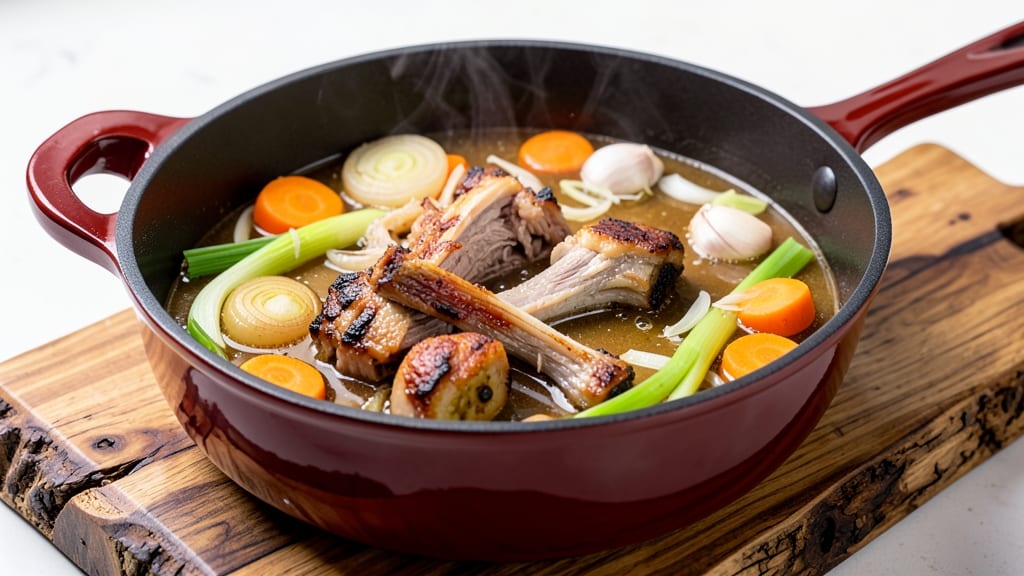
Ina Garten’s beef stock recipe transforms simple beef bones into a rich, golden elixir that forms the foundation of countless soups and sauces. The secret lies in slow simmering, where collagen-rich bones melt into a velvety broth infused with aromatic vegetables and herbs.
I’ve adapted her method to use pantry staples, making it accessible for home cooks while preserving that restaurant-quality depth.
This recipe starts with beef bones—either leftover roasts or store-bought marrow bones—and builds flavor through a two-stage simmer. First, we toast the bones to deepen their richness, then add vegetables and herbs that infuse the broth with layers of complexity.
The result? A deep, caramelized stock that’s far more nuanced than anything from a carton.
By the time you strain the finished stock, you’ll have a versatile, freezer-friendly liquid that elevates everything from braised short ribs to creamy soups. The process is hands-off but requires patience—no shortcuts here. Let’s begin with the ingredients that make this stock unforgettable.
What makes this recipe stand out is its adaptability. Use a pressure cooker to cut simmering time in half, or let it slow-cook overnight for even deeper flavor. Either way, the result is professional-quality stock that proves homemade is always better.
Ingredients for ina garten beef stock
Pantry staples meet professional technique to create Ina Garten's legendary beef stock foundation.
| Ingredient | Amount | Notes |
|---|---|---|
| Beef Bones 🦴 | 4 lb | Marrow or knuckle bones preferred |
| Cold Water 💧 | 12 cups | Filtered preferred for clarity |
| Yellow Onion 🧅 | 1 whole | Quartered, skin on for color |
| Carrots 🥕 | 2 whole | Chopped into large chunks |
| Celery Stalks 🌿 | 4 whole | Cut into 2-inch pieces |
| Garlic Cloves 🧄 | 6 cloves | Smashed, skins left on |
| Fresh Parsley Stems 🌿 | 8 whole | Tied in bundle for removal |
| Fresh Thyme Sprigs 🌿 | 4 whole | Stems intact for infusion |
| Black Peppercorns 🌶️ | 1 tbsp | Crushed lightly for depth |
| Diamond Crystal Kosher Salt 🧂 | 1 tbsp | For seasoning, not preservation |
| Apple Cider Vinegar 🍎 | 1 tbsp | Brightens flavor profile |
| Extra-Virgin Olive Oil 🫒 | 2 tbsp | For bone toasting |
The bones form the stock's soul—marrow or knuckle bones yield the richest collagen release. Costco or local butchers often carry marrow bones in bulk, while Whole Foods stocks high-quality knuckle bones. Look for bones with visible marrow channels and minimal surface fat. If using leftover roasts, trim excess fat—it can cloud the stock. The two-stage simmer (toast bones first) develops deeper Maillard reactions, creating that signature caramelized depth. Penzeys or Spicewalla carry premium spices if you want to elevate the aromatics further.
No fresh thyme? Dried thyme at one-third the amount works, though fresh imparts superior brightness. Substituting bay leaves (2 whole) adds earthy notes but requires removal. The apple cider vinegar isn't optional—it tenderizes bones and brightens the final product. For a pressure cooker adaptation, reduce simmer time by half but maintain the same ingredient ratios. Organic vegetables (like Trader Joe's or local farmers' markets) contain fewer pesticides and contribute cleaner flavor profiles. The parsley stems bundle acts as a natural strainer—no need to remove it until the very end.
This stock peaks after 24 hours of slow simmering but stays stable for 4-5 days refrigerated. For long-term storage, freeze in ice cube trays—each cube equals 1 tablespoon for precise cooking. Label containers with date and contents; properly stored stock maintains quality for up to 6 months. The golden rule: never boil vigorously—gentle simmering preserves clarity and prevents bitterness. Strain through cheesecloth for the cleanest results, discarding solids completely.
Why You'll Love This Recipe
- No-Chop Needed: I swear by this trick—just toss in whole onions, carrots, and celery stalks (no peeling, no dicing). The bones do all the work while you sip coffee and pretend you’re not cooking.
- Deep Umami Magic: That slow-simmered beef marrow? Chef’s kiss. The cold water extraction pulls out flavors you’d never get from store-bought—rich, gelatinous, and perfect for soups or braising. Honestly, my first sip changed how I cook forever.
- Weeknight Pantry Hero: Between us, this is my go-to when I’m low on time or ingredients. Freeze leftover stock in ice cube trays for easy boosts to pasta, risotto, or even scrambled eggs. (Yes, even on a Tuesday night.)
- Budget-Friendly Goldmine: Beef bones are cheap if you know where to look (butcher scraps, Costco), and this recipe stretches them into gallons. I’ve turned $10 worth of bones into enough stock for a month’s worth of meals—no waste, all flavor.
Step-by-step instructions for Ina Garten beef stock
Aromatic, deeply flavorful stock begins with proper technique and patience. Here's how to coax rich, golden hues and complex layers from simple pantry ingredients.
Prepare the Bones for Maximum Flavor Extraction
Preheat your oven to 425°F. Place the 4 lb beef bones on a rimmed baking sheet and roast for 20-25 minutes, turning occasionally, until they develop a deep mahogany color and crispy edges. This step caramelizes the bone surfaces, creating concentrated flavor compounds that will infuse the stock.
While the bones roast, prepare the vegetables. Quarter the whole yellow onion skin-on, chop the 2 whole carrots into large chunks, and cut the 4 whole celery stalks into 2-inch pieces. Smashed 6 garlic cloves with skins intact will add depth without overpowering. Tie the 8 whole fresh parsley stems together with kitchen twine and set aside for easy removal later.
Toast the Bones and Build the Aromatic Base
Heat a large Dutch oven over medium heat. Add the 2 tablespoons extra-virgin olive oil and swirl to coat the bottom. Immediately add the roasted bones in a single layer and let them sear undisturbed for 3-4 minutes until they develop a golden crust. This creates a flavorful fond that will form the stock's foundation.
Add the quartered onion, chopped carrots, celery pieces, and smashed garlic cloves to the pot. Stir to combine with the browned bone fragments, then pour in the 12 cups cold water. The water should come about halfway up the sides of the bones. Add the 1 tablespoon apple cider vinegar and 1 tablespoon black peppercorns—the acidity helps extract collagen while the pepper adds subtle warmth.
Simmer Gently for Deep Flavor Development
Bring the stock to a gentle simmer over medium-low heat. Once bubbles form at the edges and the stock begins to move slowly, reduce heat to maintain a barely perceptible bubble—this is the key to extracting maximum flavor without clouding the stock. Skim off any foam or impurities that rise to the surface during the first 15 minutes of simmering.
Add the 4 whole fresh thyme sprigs and the tied parsley bundle. Partially cover the pot and simmer for 3-4 hours, maintaining that gentle simmer. The bones should become tender enough to pierce with a paring knife by the end. If the stock reduces too much, add hot water in small increments to maintain the original volume.
Strain and Finish with Seasoning
Remove the pot from heat and let the stock sit for 10 minutes to allow any settled particles to drop to the bottom. Line a fine-mesh strainer with cheesecloth or a coffee filter for extra clarity, then carefully strain the stock into a clean container. Discard the solids and any remaining vegetables.
Season the stock with the 1 tablespoon diamond crystal kosher salt, adjusting to taste. The stock should be rich and deeply flavorful with a golden hue. Let it cool to room temperature, then refrigerate. Once chilled, the fat will solidify on top—skim this off before using the stock in recipes. This homemade version will keep for up to 5 days refrigerated or 3 months frozen, far surpassing store-bought versions in complexity and depth.
Pro Tips For Making Ina Garten Beef Stock
- Brown the Bones First: Skip the slow start—sear your beef bones in batches on high heat until deep brown, almost black in spots. I learned this the hard way: skipping this step means bland stock no matter how long you simmer. Use a heavy pot and don’t rush; let them crisp for 5-7 minutes per side.
- Chop Veggies Coarse: Dice onions, carrots, and celery into 1-inch chunks—not tiny pieces that turn to mush. They’ll flavor the stock without clogging the strainer, and you’ll spend less time skimming bits later. (Yes, even if it looks rustic.)
- Simmer, Don’t Boil: Keep the stock at a gentle simmer—tiny bubbles, no rolling. Boiling scalds the collagen instead of rendering it into rich gelatin. After the first 30 minutes, lower heat if needed; patience here makes all the difference.
- Strain Twice: Line your strainer with cheesecloth or a coffee filter for the final pass—it catches the last of the fine particles that make stock look cloudy. I used to skip this, but clear stock tastes cleaner, especially in sauces. (Worth the extra 30 seconds.)
Best sauces and condiments for this dish
Classic Red Wine Reduction
For a bold, velvety sauce, reduce 1 cup dry red wine (like Cabernet Sauvignon or Merlot) with 2 tablespoons butter and 1 tablespoon shallots until syrupy. Stir in ½ cup reserved beef stock and simmer until thickened.
This sauce pairs perfectly with braised short ribs or beef Wellington. I often finish it with a splash of balsamic vinegar for depth. 🍷
Mustard Cream Sauce
Blend ½ cup crème fraîche with 2 tablespoons Dijon mustard, 1 tablespoon fresh tarragon, and ¼ cup beef stock until smooth. Thin with additional stock if needed. This sauce elevates beef bourguignon or pot roast. For extra richness, whisk in 1 tablespoon cold butter at the end. 🌿
Pan Sauce with Herbs
Deglaze the pot you cooked your beef in with ½ cup beef stock and 1 tablespoon brandy. Add 1 teaspoon fresh thyme, 1 bay leaf, and a pinch of salt.
Simmer until reduced by half, then strain. This sauce captures all the fond flavors from your dish. I like to finish it with a pat of butter for shine. 💡
Creamy Mushroom Sauce
Sauté 1 cup sliced mushrooms in 1 tablespoon butter until golden. Add ½ cup beef stock and 1 tablespoon heavy cream, then simmer until thick. Finish with 1 teaspoon fresh parsley and a crack of black pepper. This sauce transforms beef stroganoff or pot pies. 🍄
Gravy for Mashed Potatoes
Mix 1 cup beef stock with 2 tablespoons butter and 1 tablespoon flour to make a roux. Whisk in ½ cup milk and simmer until thick. Season with salt and pepper to taste. This gravy makes mashed potatoes irresistible. 🥔
Balsamic Glaze
Reduce ½ cup beef stock with 2 tablespoons balsamic vinegar and 1 tablespoon honey until syrupy. Drizzle over grilled steaks or roasted vegetables for a sweet-savory contrast. This glaze adds elegance to any beef dish. 🍯
Nutrition facts
Frequently asked questions
Can I use leftover roast beef bones instead of fresh marrow bones?
Leftover roast beef bones work perfectly—they're rich in flavor and collagen. Just trim any excess fat first to prevent cloudiness in the stock. For best results, roast these bones at 425°F for 20 minutes before simmering to deepen their caramelized notes.
How do I know when the stock is done simmering?
The stock is ready when the bones are tender enough to pierce with a paring knife (about 3-4 hours for beef bones). The broth should also have a rich, golden color and a deep, meaty aroma. If it reduces too much, add hot water gradually to maintain the original volume.
Can I make this stock in a slow cooker or Instant Pot?
Yes! For a slow cooker, follow the same steps but simmer on low for 6-8 hours instead of stovetop. In an Instant Pot, use the "High Pressure" setting for 90 minutes (natural release), then strain. The pressure cooker cuts time by half but delivers the same deep flavor.
Why does my stock look cloudy after simmering?
Cloudiness usually means the stock boiled too vigorously or had excess fat/impurities. To fix it, skim foam during the first 15 minutes and maintain a gentle simmer. For extra clarity, strain through cheesecloth instead of a regular strainer.
How should I store and reheat this stock?
Store stock in airtight containers in the fridge for up to 5 days or freeze for 3 months. To reheat, warm gently on the stove over low heat—never microwave, as it can make the stock taste flat. Skim off solidified fat before using.