
Main Courses
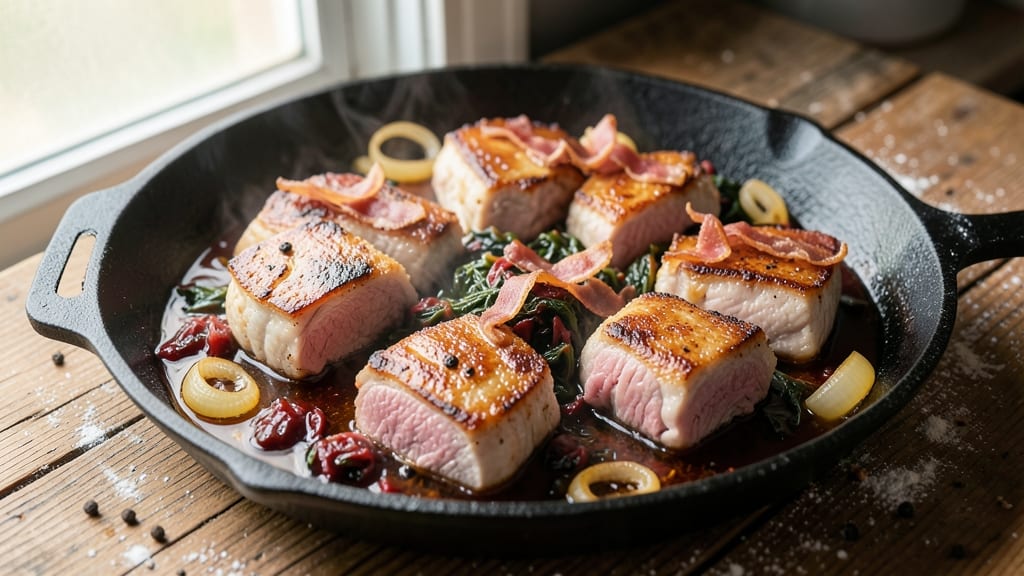
This old-fashioned Grandma's pork and sauerkraut recipe brings back the hearty, slow-simmered flavors of my childhood Sunday dinners in Georgia—where cast iron skillets and whole-hog traditions ruled the kitchen.
The secret lies in frying thick-cut pork chops until golden, then braising them with tangy sauerkraut until the meat falls apart tender and the kraut softens into a sweet, caramelized bed.
I still remember how my grandma would say, "Patience is the key—let it cook low and slow, just like love."
The beauty of this dish is its simplicity: just a few quality ingredients working together over time. You’ll start with crispy pork chops—sealed in their own fat for maximum flavor—then add sauerkraut, onions, and just enough liquid to let everything meld into a rich, savory stew.
The longer it simmers, the deeper the flavors become, creating a dish that tastes even better the next day. My heritage Gloucestershire Old Spots pigs always deliver the perfect balance of richness and tenderness, but any good pork chop will work if you give it time.
By the time you serve it, you’ll have a steaming pot of slow-simmered pork and sauerkraut with crisp edges on the meat and a glossy, tangy sauce that clings to every bite. The aroma alone—smoky, slightly sweet, with that unmistakable sauerkraut tang—will have everyone at the table asking for seconds.
This isn’t just a recipe; it’s a taste of home, a tradition that connects generations through the simple magic of time and patience.
Serve it with buttery mashed potatoes or crusty bread to soak up every last drop of that flavorful sauce. The leftovers? Even better reheated the next day, making this the ultimate foolproof, family-pleasing meal. Let’s get cooking—your kitchen will thank you for the memories you’re making.
Ingredients for old fashioned grandma's pork and sauerkraut
Six simple ingredients transform into a slow-simmered tradition your family will crave for generations.
| Ingredient | Amount | Notes |
|---|---|---|
| Bone-In Pork Chops 🥓 | 6 whole | 1-inch thick, center-cut preferred |
| Unsalted Butter 🧈 | ½ cup | For frying, full-fat preferred |
| Yellow Onions 🧅 | 2 whole | Thickly sliced, yellow or red |
| Sauerkraut 🥬 | 2 cups | Unsweetened, drained if watery |
| Apple Cider Vinegar 🍎 | ¼ cup | For tangy depth |
| Beef Broth 🍲 | 1 cup | Low-sodium preferred |
| Bay Leaves 🌿 | 2 whole | Fresh for best flavor |
| Black Peppercorns 🌶️ | 1 tbsp | Freshly cracked preferred |
| Kosher Salt 🧂 | 1 ½ tsp | Adjust to taste |
| Fresh Thyme 🌿 | ¼ cup | Leaves only, chopped |
| Heavy Cream 🥛 | ¼ cup | Full-fat for richness |
| All-Purpose Flour 🌾 | 2 tbsp | For dredging chops |
The pork chops are non-negotiable—thick-cut and bone-in for that old-fashioned flavor. Gloucestershire Old Spots if you can find them, but any good pork chop works. Look for marbling at the butcher counter—Whole Foods or local farms usually have the best quality. The butter? Plugrá or Land O'Lakes work fine, but if you've got European-style unsalted, use that. The sauerkraut should be tangy, not sweet—check the label for 'unsweetened' if you're unsure. Drain it well if it's watery, or the sauce will be thin.
No apple cider vinegar? White vinegar or lemon juice works in a pinch, but it won't have that same fruity depth. Fresh thyme is ideal, but dried works at one-third the amount. The beef broth can be homemade or store-bought—just watch the sodium. Swanson or Pacific Foods are reliable low-sodium options. If you're short on time, skip the dredging flour—just season the chops well with salt and pepper. And trust me, the heavy cream at the end is worth it (the full-fat version, not that skim stuff).
This dish tastes even better the next day, so make extra. Store in the fridge for 4-5 days or freeze for 3 months. The sauce thickens as it cools, so add a splash of broth when reheating. I always serve it with buttery mashed potatoes—the kind made with whole milk and butter—to soak up every last bit of that saucy goodness. Leftovers reheat beautifully in a skillet with a splash of water.
Why You'll Love This Recipe
- One-Pan Magic: I swear by this—just sear the pork chops, toss in the onions, and let the sauerkraut simmer. No chopping boards, no extra pots, just one pan that does all the work while you sip your coffee.
- Tangy-Sweet Crunch: That vinegar and sauerkraut combo? It’s like a flavor explosion—sharp, sweet, and just enough acidity to cut through the richness of the butter-basted pork. Honestly, it’s the kind of taste that makes you go back for seconds without thinking.
- Weeknight Workhorse: This feeds four easily, but I’ve also stretched it into lunches for days. The leftovers? Even better the next day—pork stays tender, kraut gets more mellow, and honestly, it’s my go-to for busy nights when I don’t want to overthink dinner.
- Budget-Friendly Feast: Bone-in pork chops stretch further than you’d think, and sauerkraut lasts forever in the fridge. Between us, this is one of those recipes where you’re getting restaurant-quality comfort without breaking the bank or spending hours in the kitchen.
Step-by-step instructions for old fashioned grandma's pork and sauerkraut
This classic dish comes together with simple techniques and rich flavors that'll transport you to your grandmother's kitchen.
Prepare and Sear the Pork Chops
Pat the 6 whole bone-in pork chops dry with paper towels—this step is crucial for that perfect golden crust. Season both sides generously with the 1.5 teaspoons kosher salt and 1 tablespoon freshly cracked black peppercorns. Let them sit at room temperature for 15 minutes while you get everything ready.
Heat a large skillet over medium-high heat and add the 0.5 cup unsalted butter. Once the butter foams, add the pork chops in a single layer. Cook for 3-4 minutes per side until they develop a deep golden-brown crust. Don't move them around too much—this helps create that beautiful sear. Transfer the cooked chops to a plate and set aside, keeping them warm.
Build the Sauerkraut Base
In the same skillet (no need to clean it—the browned bits add flavor), add the 2 whole yellow onions that have been thickly sliced. Cook them over medium heat for 5-6 minutes until they begin to soften and turn translucent. This is where the onions develop their natural sweetness.
Add the 2 cups sauerkraut to the skillet, stirring to combine with the onions. Cook for another 3-4 minutes until the sauerkraut starts to soften and release its tangy aroma. Stir in the 0.25 cup chopped fresh thyme leaves and the 2 whole bay leaves, letting them warm through for about 1 minute.
Simmer the Sauerkraut Mixture
Pour in the 0.25 cup apple cider vinegar and 1 cup beef broth, scraping up any browned bits from the bottom of the pan. Bring the mixture to a gentle simmer over medium-low heat. Let it cook uncovered for 10-12 minutes, stirring occasionally, until the sauerkraut has softened completely and the liquid has reduced slightly. You want the mixture to be thick enough to coat the back of a spoon.
Taste and adjust seasoning with more kosher salt if needed. The vinegar and broth should mellow out the sauerkraut's tang, creating a balanced, savory base. Keep the mixture warm while you finish the pork chops.
Create the Creamy Sauce
Return the pork chops to the skillet with the sauerkraut mixture. Spoon any accumulated juices from the plate over the chops. Reduce the heat to low and let everything simmer gently together for 5 minutes, allowing the pork chops to absorb the sauerkraut's flavors.
In a small bowl, whisk together the 2 tablespoons all-purpose flour and 0.25 cup heavy cream until smooth. Slowly pour this mixture into the skillet with the pork chops, stirring constantly. The sauce will thicken immediately—this is what gives the dish its signature creamy finish. Simmer for another 2-3 minutes until the sauce coats the pork chops beautifully and reaches your desired consistency.
Serve with Warm Crusty Bread
Remove the 2 whole bay leaves from the skillet before serving. The dish should be rich and flavorful, with tender pork chops swimming in a creamy sauerkraut sauce. Let the pork chops rest for 2-3 minutes before serving to allow the juices to redistribute.
This dish tastes even better the next day, as the flavors meld together. Serve with warm crusty bread to soak up every last bit of that delicious sauce. The perfect balance of tangy sauerkraut, savory pork, and creamy sauce makes this a comforting classic that'll become a family favorite.
Pro Tips For Making Old Fashioned Grandma'S Pork And Sauerkraut
- Brown the Onions First: I learned this the hard way—sautéing onions with the sauerkraut straight off the stove means they’ll just steam. Get that pan hot, toss in the sliced onions, and let them caramelize for 5-6 minutes until they’re soft with a golden edge. That sweetness cuts through the tang of the sauerkraut and makes the whole dish taste deeper.
- Salt the Pork Generously: Bone-in pork chops need salt before they hit the pan—at least 30 minutes ahead, if you can swing it. I used to skip this, and the meat always tasted bland no matter how much butter I added. Season both sides with coarse salt (about 1 teaspoon per chop) and let it sit. The bone marrow will thank you later.
- Deglaze with Vinegar: After searing the pork, don’t just add the sauerkraut straight away. Pour in ¼ cup of apple cider vinegar and let it bubble for 2 minutes—this lifts all the browned bits off the pan. That’s where the flavor lives, and skipping this step means missing out on the richest part of the dish.
- Simmer Sauerkraut Low: Sauerkraut releases liquid like crazy, and if you crank the heat to cook it down, you’ll end up with a watery mess. Once the pork’s done, reduce the heat to medium-low, cover the pan, and let the kraut soften for 10-15 minutes. Stir occasionally, and you’ll end up with a thick, saucy bed—not a soggy pile.
Wine and beer pairings for these flavors
Red Wine Classics
For this hearty dish, I always reach for a Pinot Noir from Oregon or Burgundy—its bright acidity cuts through the richness of the pork while complementing the tangy sauerkraut. Look for wines with notes of cherry and earthiness, like Domaine Serene Pinot Noir or Louis Jadot Bourgogne.
The medium body won’t overpower the dish but will stand up to the creamy sauce. Serve slightly chilled (55-60°F) to let its flavors shine alongside the pork’s caramelized edges. 🍷
German Beer Pairings
A crisp German Helles Lager is my go-to for this recipe—its malty sweetness and subtle hop bitterness balance the sauerkraut’s tang perfectly. I love Weihenstephaner Original or Paulaner Münchner Hell for their clean, refreshing profiles.
For something heartier, try a Dunkelweizen (dark wheat beer) like Weissbier Dunkel from Schneider Weisse—its caramel notes mirror the pork’s caramelization. Serve at 45-50°F to preserve its crispness.
Cider for Tangy Balance
Don’t overlook dry hard cider as a pairing—it enhances the sauerkraut’s acidity while complementing the pork’s richness. I recommend Angry Orchard Dry or Woodchuck Hard Cider for their apple-forward profiles with a touch of spice.
The slight effervescence cleanses your palate between bites, making each mouthful of creamy pork and kraut taste fresh. Serve at 45°F to highlight its crispness. 🍏
Avoid These Mistakes
Skip sweet or oaky wines—they’ll clash with the sauerkraut’s tang and overwhelm the dish. Heavy reds like Cabernet Sauvignon or bold beers like stouts will drown out the pork’s delicate flavors.
Even white wines with high alcohol content (like Chardonnay) can feel too heavy. Stick to lighter, brighter options that let the dish’s natural flavors take center stage.
Serving Temperature Tips
Wine and beer should always be served at the right temperature to enhance their flavors. Red wines like Pinot Noir should be slightly chilled (55-60°F) to open up their aromas without muting their fruitiness. Lagers and ciders should be ice-cold (45°F) to maintain their crispness.
I keep my wines in the fridge for 30 minutes before serving, while beers and ciders go straight from the fridge to the table. 💡
Nutrition facts
Frequently asked questions
Can I use pork shoulder instead of pork chops?
For a richer, more tender result, substitute 2 pounds bone-in pork shoulder cut into chunks. Brown the meat first, then proceed with the recipe. The cooking time will increase to 2-3 hours on low heat until fork-tender. This version works beautifully for sandwiches or serving with dumplings.
Why does my sauerkraut taste too sharp?
The tang comes from fermentation, but you can balance it by adding 1 extra tablespoon of apple cider vinegar during simmering or a pinch more sugar (1 teaspoon). Let the mixture cook uncovered for 5 extra minutes to mellow the flavors. Sweetened sauerkraut? Skip the vinegar entirely and add 1 tablespoon honey instead.
How do I make this dish ahead of time?
This recipe tastes even better the next day! Let it cool completely, then refrigerate in an airtight container for up to 4 days. Reheat gently in a skillet with 2 tablespoons water over medium heat for 10 minutes, stirring occasionally. For freezing, portion into containers and store for 3 months. Thaw overnight in the fridge before reheating.
What's the best way to serve leftovers?
Reheat leftovers in a skillet with 1 tablespoon butter until bubbly, then add 2 tablespoons broth to loosen the sauce. For a quick meal, serve on toasted rye bread with a dollop of sour cream or shredded cheese. It also makes great pork-and-kraut stuffed cabbage rolls or tacos! The creamy sauce thickens when reheated, so add extra liquid if needed.
Can I substitute sauerkraut with another vegetable?
While sauerkraut's tang is irreplaceable, you can try green cabbage with 1 tablespoon vinegar or kale with 1 teaspoon lemon juice. For a heartier dish, use 1 cup chopped Brussels sprouts> with the onions. However, the dish loses its signature flavor profile—sauerkraut's fermentation is key to the traditional taste. If you must substitute, add ½ teaspoon mustard powder to mimic the tang.