
Sauces & Condiments
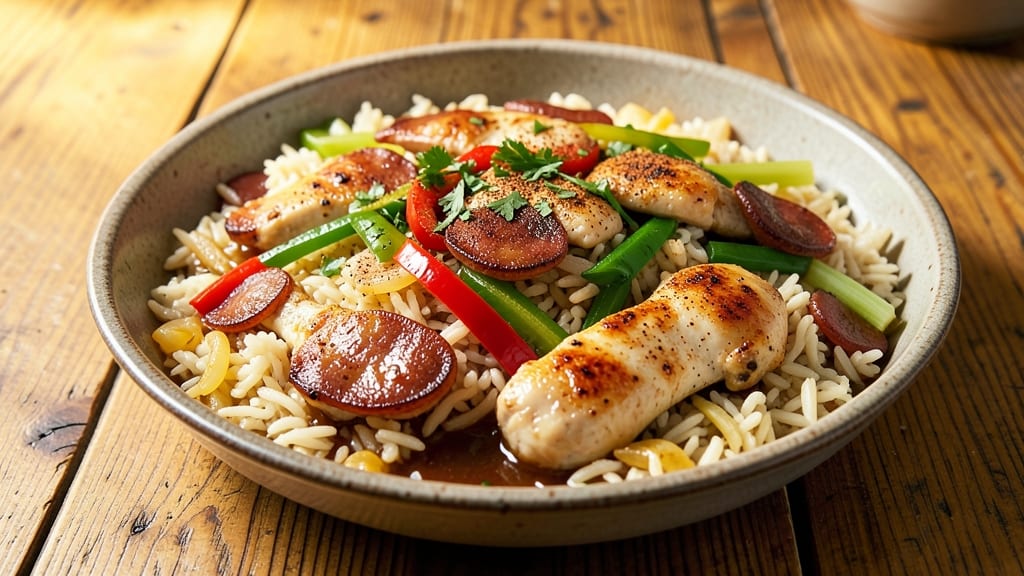
This original jambalaya recipe brings together the bold flavors of Louisiana in one flavorful, one-pot dish that's as satisfying as it is traditional. The perfect balance of smoky sausage, tender chicken, and aromatic rice creates a dish that's rich in history and even richer in taste.
I've refined this recipe over years of cooking, ensuring every bite delivers that signature jambalaya experience without sacrificing simplicity.
The foundation of great jambalaya lies in its spice blend—smoked paprika, cayenne, and thyme work together to create layers of warmth that permeate every ingredient. You'll start by building the flavor base in a Dutch oven, where onions, bell peppers, and celery create the holy trinity that defines Cajun cooking.
This method develops deep, complex flavors that transform simple ingredients into something extraordinary.
What you'll end up with is a hearty, aromatic dish with tender chicken, perfectly cooked rice, and sausage that's infused with all the spices. The rice absorbs the rich, savory broth while maintaining its distinct texture, creating a satisfying bite in every spoonful.
This jambalaya is designed to be served family-style, where everyone can dig in and enjoy the perfect fusion of textures and flavors.
The beauty of this recipe is its versatility—swap the chicken for shrimp or crawfish for a seafood version, or keep it classic with andouille sausage. It's the kind of dish that improves with time, as flavors meld and deepen during the cooking process.
Let's create jambalaya that tastes like a taste of Louisiana in every bite.
Ingredients for original jambalaya
Sixteen essential ingredients create Louisiana's iconic one-pot spiced sausage and rice fusion.
| Ingredient | Amount | Notes |
|---|---|---|
| Long-Grain White Rice 🍚 | 2 cups | Uncooked, medium grain preferred |
| Andouille Sausage 🌭 | 1 ½ lb | Smoked, sliced into half-moons |
| Boneless Chicken Thighs 🍗 | 1 ½ lb | Skin-on, trimmed of excess fat |
| Yellow Onion 🧅 | 1 whole | Medium, diced (about 1.5 cups) |
| Green Bell Pepper 🌶️ | 1 whole | Medium, diced (about 1 cup) |
| Celery Stalks 🥬 | 3 whole | Medium, diced (about 1 cup) |
| Garlic Cloves 🧄 | 4 cloves | Fresh, minced |
| Smoked Paprika 🌶️ | 2 tbsp | High-quality, ground |
| Dried Thyme 🌿 | 1 tbsp | Or 1 tbsp fresh, chopped |
| Ground Cayenne Pepper 🔥 | 1 tsp | Adjust for heat preference |
| Salt 🧂 | 1 ½ tsp | Kosher or sea salt |
| Black Pepper 🌶️ | ½ tsp | Freshly ground |
| Chicken Broth 💧 | 3 cups | Low-sodium preferred |
| Fresh Parsley 🌿 | ¼ cup | Chopped, for garnish |
| Extra-Virgin Olive Oil 🫒 | 2 tbsp | For sautéing |
The andouille sausage is the heart of jambalaya, so choose a quality brand—look for Zatarain's or Johnsonville in the smoked sausage section. Freshness matters here: if the sausage smells overly smoky or has a grayish tint, grab another package. The chicken thighs should be plump and firm, not slimy. For the holy trinity—onion, bell pepper, and celery—freshly cut veggies develop deeper flavor than pre-chopped. If you're short on time, Trader Joe's sells pre-diced frozen veggie mixes that work in a pinch. The rice? Long-grain white is traditional, but jasmine rice adds a fragrant twist.
No andouille sausage? Italian sausage or kielbasa works in a pinch, but expect less smokiness. Swapping chicken for shrimp or crawfish? Use 1 lb shrimp or 1.5 lbs crawfish instead, and add them later in the cooking process. Short on thyme? Dried oregano at half the amount mimics its earthy notes. For extra heat, add cayenne to taste—this is jambalaya, after all. The chicken broth can be subbed with seafood stock for seafood jambalaya, or even vegetable broth for a vegetarian version. Fresh parsley is ideal, but dried parsley works too—just use one-third the amount.
Jambalaya tastes even better the next day as flavors meld. Store leftovers in an airtight container for up to 5 days in the fridge, or freeze for up to 3 months for later meals. The rice will dry out if reheated with extra liquid, so sprinkle a splash of broth when warming. This dish reheats beautifully in a skillet over medium heat—stir occasionally to prevent sticking. For meal prep, portion into individual containers so everyone can grab their own serving.
Why You'll Love This Recipe
- One-Pot Magic: I swear by this recipe because it’s actually one-pan—no rice cooker, no extra bowls. Just brown the chicken and sausage in the same skillet where the rice cooks, and boom. Less cleanup than my usual stir-fry routine.
- Smoky Deep Umami: The andouille sausage and chicken thighs? Chef’s move. That smoky, slightly spicy fat renders into the rice, turning it into a flavor bomb. Honestly, the first bite makes me forget I’m not at a Creole restaurant.
- Leftovers for Days: This dish begs to be made in bulk. The rice stays fluffy for three days in the fridge, and the flavors only get richer. I freeze half for lazy Mondays—just reheat with a splash of water, and it’s like I cooked it fresh.
- Budget Crowd-Pleaser: Andouille sausage and chicken thighs stretch to feed four for under $15. Between us, this is my go-to for game nights or when my college-aged kids show up hungry. Everyone eats, no one complains, and I still feel like I made a fancy meal.
Step-by-step instructions for spiced rice and sausage fusion in one pot
Here's the method to create a rich, flavorful jambalaya with perfectly cooked rice and tender protein.
Sauté the Holy Trinity of Vegetables
Heat the 2 tablespoons extra-virgin olive oil in a large, heavy-bottomed pot over medium heat. Add the diced yellow onion, green bell pepper, and celery stalks. Cook for 8-10 minutes, stirring occasionally, until the vegetables soften and begin to caramelize slightly. This is the foundation of jambalaya's flavor profile, often called the "holy trinity" in Creole cooking.
You'll know they're ready when they release their moisture and start to brown at the edges. This process develops deep, sweet undertones that balance the smoky sausage and spicy elements. Keep the heat steady—too high will burn the vegetables before they soften properly.
Add Protein and Build the Spice Base
Increase the heat to medium-high and add the sliced andouille sausage and boneless chicken thighs. Cook for 5 minutes, stirring occasionally, until the sausage begins to brown and release its fat. This step is crucial for developing the rich, smoky flavor that defines jambalaya.
Reduce the heat to medium and add the minced garlic cloves, 2 tablespoons smoked paprika, 1 tablespoon dried thyme, 1 teaspoon ground cayenne pepper, 1.5 teaspoons salt, and 0.5 teaspoon black pepper. Stir for 1 minute until the spices are fragrant and the garlic is lightly toasted. This creates the aromatic base that will infuse the entire dish.
Toast the Rice and Deglaze
Add the 2 cups long-grain white rice to the pot and stir to coat it evenly with the spices and rendered fats. Toast the rice for 2 minutes, stirring constantly, until it becomes translucent at the edges. This step is essential for developing nutty flavors in the rice and preventing a mushy texture.
Pour in the 3 cups chicken broth, scraping up any browned bits from the bottom of the pot with a wooden spoon. These bits, known as fond, contain concentrated flavors that will enrich your jambalaya. Bring the mixture to a gentle boil, then immediately reduce the heat to low, cover the pot, and let it simmer.
Simmer Until Perfectly Cooked
Simmer the jambalaya for 20-25 minutes, maintaining a gentle simmer. Do not lift the lid during this time—this allows the rice to steam evenly and prevents the top layer from drying out. The rice should be tender with just a slight bite remaining in the center, and the liquid should be mostly absorbed.
About 5 minutes before the rice is fully cooked, check the seasoning and adjust if needed. The dish should be well-seasoned but not overly salty. If the mixture appears too dry before the rice is fully cooked, add 2-3 tablespoons of water to maintain the proper consistency.
Rest and Garnish
Once the rice is fully cooked and tender, remove the pot from heat and let it rest, covered, for 5 minutes. This resting period allows the flavors to meld and the rice to absorb any remaining liquid, resulting in a more cohesive texture.
Garnish with the chopped fresh parsley just before serving. The parsley adds a bright, fresh contrast to the rich, smoky flavors of the jambalaya. Serve immediately with crusty bread or over steamed vegetables for a complete meal.
Pro Tips For Making Original Jambalaya
- CRISPY THE SAUSAGE FIRST: Toss the andouille slices in a dry skillet over medium-high heat for 3-4 minutes before adding anything else. I learned this the hard way—skipping this step means you’ll end up with mushy sausage that soaks up all the broth instead of adding texture. The edges should be just starting to brown when you move them to the pot.
- DON’T SKIP THE CHICKEN REST: Pull the chicken thighs out of the freezer 20 minutes before cooking, then pat them very dry with paper towels. Cold, wet meat steams instead of searing, and you’ll end up with bland, rubbery chicken. Trust me, this small step makes a real difference in flavor and texture.
- STIR THE RICE IN: After the chicken and sausage are browned, sprinkle the raw rice over the top and let it sit for 30 seconds before adding broth. This toasts the rice slightly, giving it that nutty base flavor you taste in the best jambalaya. (Yes, it looks weird, but it works.)
- SALT THE BROTH LIKE THE SOUP’S ON FIRE: Season the broth before it goes in the pot—aim for at least 1½ teaspoons of salt per 4 cups of liquid. The andouille is already salty, and if you wait until the end, you’ll either underseason or overcorrect. Taste the broth alone first; it should be noticeably salty before the other ingredients join the party.
Storing and reheating your leftovers
Refrigerator Storage
Let your jambalaya cool completely before transferring to airtight containers—I use glass Pyrex with snap-on lids for best results. Store in the fridge at 40°F or below for up to 5 days, though I find the flavors deepen beautifully after 24 hours.
The rice absorbs extra liquid, so I always add a splash of chicken broth when reheating to restore moisture. 🌶️
Freezer Prep Tips
For longer storage, portion jambalaya into freezer-safe bags (leave 1-inch headspace for expansion) or glass containers. Label with the date—it keeps for 3 months at 0°F.
To prevent freezer burn, press out excess air before sealing. When ready to eat, thaw overnight in the fridge for even reheating. 💫
Stovetop Reheating
My preferred method is stovetop reheating to maintain texture. Transfer jambalaya to a heavy-bottomed skillet over medium-low heat and add 2-3 tablespoons of broth to prevent drying. Stir occasionally for 10-15 minutes until heated through (165°F internal temp).
Taste and adjust seasoning—jambalaya often needs a pinch of salt or cayenne after reheating. ⚡
Microwave Method
For quick meals, microwave individual portions in a microwave-safe dish covered with a damp paper towel. Heat on 70% power for 3-4 minutes, stirring halfway. Add 1-2 tablespoons of broth if the rice looks dry. Avoid full power—it can make the rice mushy. 🔥
Serving Leftovers
Jambalaya reheats best when served family-style from the same pot. If storing in containers, sprinkle a dash of olive oil over the top before sealing to preserve moisture. Garnish with fresh parsley or green onions to brighten flavors. Leftovers make fantastic lunches or quick dinners—just reheat and enjoy! 💛
Freezer-to-Fridge Transition
If your jambalaya was frozen, transfer it to the fridge 24 hours before reheating to thaw gradually. This prevents uneven cooking. For extra insurance, place the container in a cool water bath (sealed in a second container) to speed thawing safely.
Never microwave frozen jambalaya directly—it’ll turn out uneven and soggy. 💡
Nutrition facts
Frequently asked questions
What makes this jambalaya recipe "original"?
This recipe stays true to Louisiana roots by using the classic "holy trinity" (onion, bell pepper, celery) and authentic Cajun spices like smoked paprika and cayenne. The key difference is the layered cooking method—starting with the vegetables, then adding protein, then toasting the rice—that creates that signature one-pot depth of flavor.
Can I substitute seafood for the chicken and sausage?
For a seafood jambalaya, swap the chicken for 1 lb shrimp or 1.5 lbs crawfish and reduce the sausage to 1 lb. Add shrimp 5 minutes before serving to keep them tender. Use seafood stock instead of chicken broth for extra depth.
Why does my jambalaya turn out mushy?
Mushy rice usually means either too much liquid or lifting the lid too soon. Always use a heavy-bottomed pot and maintain a gentle simmer without peeking. If it's still too wet, simmer uncovered for 5 extra minutes to evaporate excess moisture.
How can I make this spicier?
For extra heat, add ½ teaspoon more cayenne or a pinch of red pepper flakes. You can also stir in 1 chopped jalapeño with the holy trinity or serve with hot sauce on the side. Remember—you can always adjust after cooking, but you can't take heat out!
What's the best way to serve jambalaya?
Traditionally, jambalaya is served family-style straight from the pot with crusty bread or over steamed greens. For presentation, spoon portions onto plates and garnish with fresh parsley. It's also perfect as a filling for jambalaya-stuffed bell peppers or tamales.