
Soups & Stews
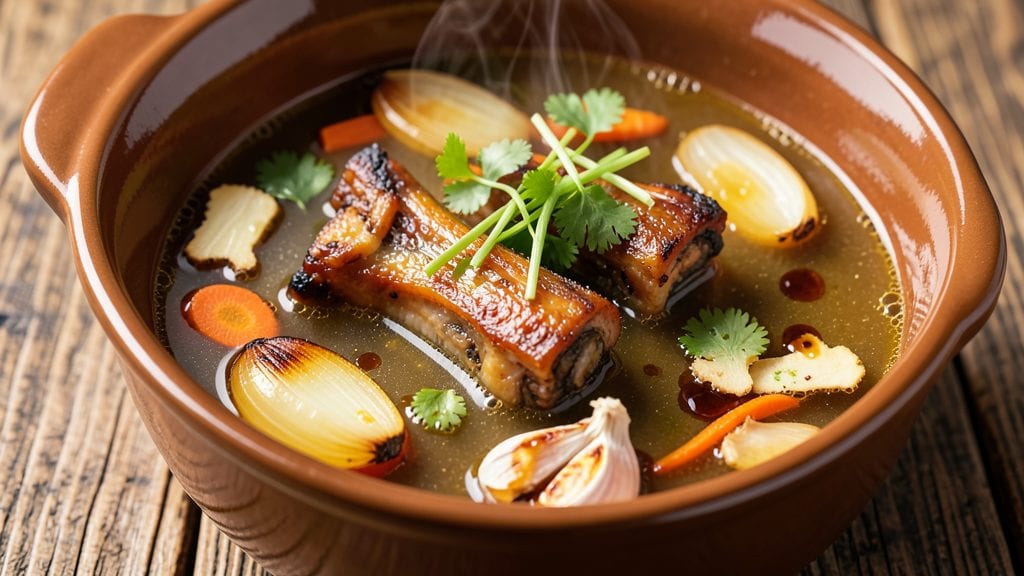
This oxtail bone broth recipe unlocks the deep, savory foundation for restaurant-quality soups and stews—where collagen-rich gelatin transforms simple ingredients into a velvety, umami-packed liquid. After years of testing, I’ve refined a method that extracts maximum flavor while keeping the process straightforward, using just a Dutch oven, aromatics, and patience.
The result? A golden, nutrient-dense broth that elevates pho, ramen, or braised dishes beyond store-bought versions.
The secret lies in the slow simmer—12 to 18 hours—where oxtail bones release gelatin and marrow, creating a naturally thickened broth with a rich, almost buttery mouthfeel.
You’ll start with whole oxtail bones, onion, garlic, ginger, and a splash of vinegar to draw out collagen, then let the flavors meld at a gentle boil. No fancy equipment needed; just time and attention to build layers of depth that turn every sip into a moment of comfort.
By the final hour, your broth will have reduced to a concentrated, aromatic liquid with a glossy sheen and a texture thick enough to coat the back of a spoon.
Strain it carefully to remove impurities, then store in the fridge or freezer for up to 6 months—though I guarantee it won’t last that long. This isn’t just broth; it’s the backbone of your cooking, transforming simple meals into something extraordinary.
Use it as the base for pho, a braising liquid for short ribs, or even a rich sauce for dumplings. The possibilities are endless, but the method remains the same: slow, patient, and deeply rewarding. Let’s get started on your first batch—your taste buds will thank you.
Ingredients for oxtail bone broth
Four pounds of oxtails and a handful of aromatics—this is where deep umami begins.
| Ingredient | Amount | Notes |
|---|---|---|
| Oxtail Bones 🦴 | 4 lb | Whole, marrow-rich preferred |
| Yellow Onion 🧅 | 1 whole | Large, quartered, skin on |
| Garlic Cloves 🧄 | 6 cloves | Peeled, smashed lightly |
| Fresh Ginger 🌿 | 2 tbsp | Grated, peeled, organic preferred |
| Apple Cider Vinegar 🍎 | ¼ cup | Or white vinegar |
| Carrots 🥕 | 2 lb | Whole, scrubbed, cut in halves |
| Celery Stalks 🥬 | 4 whole | Cut into 3-inch pieces |
| Bay Leaves 🍃 | 4 whole | Dried, high-quality |
| Black Peppercorns 🌶️ | 1 tbsp | Whole, cracked |
| Sea Salt 🧂 | 1 tbsp | Kosher preferred |
| Water 💧 | 12 cups | Filtered preferred |
| Fresh Thyme 🌿 | 2 sprigs | Stems removed, leaves only |
| Parsley Stems 🌿 | 4 whole | For bouquet garni |
Oxtail bones are the star, so pick the marrow-rich ones—they’re often sold in the butcher section or frozen at Costco or Whole Foods. Look for bones with visible fat marbling, not just lean meat. Fresh ginger matters here—organic ginger from the produce section (not the jarred kind) has the most punch. The apple cider vinegar might sound odd, but it’s key for drawing out collagen. Bragg or Heinz work fine, but if you’ve got a fancy bottle of balsamic, that’ll add depth too. For the aromatics, skip pre-cut veggies—the whole carrots and celery stalks add more flavor as they break down.
No fresh thyme? Dried works at one-third the amount, but fresh is ideal. Short on parsley stems? Tie a few sprigs of fresh parsley together with the thyme and bay leaves for your bouquet garni. Running low on vinegar? Lemon juice at the same amount gets you close. The carrots and celery can be swapped for fennel or leeks if you’re feeling fancy—just keep the total weight around 2 pounds. And if you’re using pre-cut veggies, give them a quick rinse to remove any excess starch that could cloud your broth.
This broth keeps for 6 months in the freezer—portion it into quart-sized bags for easy use. In the fridge, it’ll last 5-7 days, but honestly, it’ll disappear faster than that. I always make a double batch: one for pho, one for braising. The fat will solidify on top when chilled—just scoop it off and save it for cooking. Freeze any leftovers in ice cube trays for quick flavor boosts later.
Why You'll Love This Recipe
- Umami Bomb: That first sip? Chef’s kiss. The oxtails melt into rich, gelatinous goodness, while the vinegar brightens the depth without overpowering. The ginger lingers like a warm hug—sweet, spicy, and impossible to resist. Honestly, I’ve been known to drink it straight from the pot.
- Weeknight Workhorse: This isn’t just soup—it’s the backbone of meals. Use it for braising, grains, or even a quick stir-fry sauce. Freeze half for lazy nights when you’d rather microwave something edible than cook. My kids ask for it more than takeout, and that’s saying something.
- Budget Goldmine: Oxtails might seem pricey, but they stretch into liters of broth—way more than chicken bones ever could. The vinegar cuts costs by tenderizing the bones faster, and you’ll end up with enough to feed a family for days. (Yes, even on a Tuesday night.)
Step-by-step instructions for oxtail bone broth
Here's how to create velvety, umami-packed broth that transforms simple oxtail into liquid gold.
Prepare the Oxtail and Aromatics
Begin by examining the 4 lb oxtail bones for any remaining meat or connective tissue. Rinse them thoroughly under cold water to remove any impurities, then pat completely dry with paper towels. This drying step is crucial—it prevents the broth from becoming cloudy during cooking.
In a large stockpot, combine the oxtail bones with the quartered yellow onion (skin on), the 6 cloves garlic cloves (smashed lightly), and the 2 tbsp fresh ginger (grated). The onion skin adds beautiful color and depth to the broth, while the ginger provides a subtle warmth that balances the rich oxtail flavor. Add the 0.25 cup apple cider vinegar immediately—this helps extract collagen from the bones and tenderizes the meat.
Add Vegetables and Seasonings
Add the 2 lb carrots (cut in halves) and 4 whole celery stalks (cut into 3-inch pieces) to the pot. These vegetables provide natural sweetness and body to the broth while adding essential nutrients. Tuck in the 4 whole bay leaves, 1 tbsp black peppercorns (cracked), and 1 tbsp sea salt. The peppercorns add subtle heat, while the bay leaves contribute earthy depth that's characteristic of traditional bone broths.
Next, create a bouquet garni using the 2 sprigs fresh thyme (leaves only) and 4 whole parsley stems. Tie them together with kitchen twine and add to the pot. This bundle makes removal easy at the end and infuses the broth with bright, herbal notes without overpowering the rich oxtail flavor.
Cover with Water and Simmer Gently
Pour in the 12 cups water until the bones are completely submerged by at least 2 inches. Bring the mixture to a gentle boil over medium-high heat, then immediately reduce to the lowest setting possible—you're looking for a simmer that's just below a full boil. The water should bubble gently with occasional small bubbles breaking the surface.
This low-and-slow approach is essential. Skim any foam or impurities that rise to the surface during the first 30 minutes of cooking. Use a fine-mesh skimmer or ladle to remove these impurities, which helps create a crystal-clear broth. Once the foam subsides, you can leave it uncovered for the remainder of the cooking time.
Cook for Maximum Flavor Extraction
Simmer the broth uncovered for 8 hours. This extended cooking time is what transforms tough connective tissues into gelatinous richness. The broth will gradually darken as it develops deep, complex flavors. I like to check it periodically—after 4 hours, you'll notice the bones have released their marrow and the broth has thickened slightly.
After 8 hours, remove the pot from heat and let it sit for 15 minutes. This resting period allows any settled particles to sink to the bottom, making straining easier. Line a fine-mesh strainer with cheesecloth or a coffee filter to catch any fine particles that would normally pass through regular strainers.
Strain and Store for Maximum Freshness
Carefully ladle the broth through the strainer into a large bowl or clean pot. Discard the solids and bouquet garni. The strained broth should be clear with a beautiful amber color and rich, gelatinous body. Taste and adjust seasoning if needed—you might want to add a pinch more salt or a splash of apple cider vinegar to enhance the umami.
Let the broth cool to room temperature, then transfer it to airtight containers. It will keep in the refrigerator for up to 5 days or in the freezer for up to 6 months. For best results, use it within a few days for maximum freshness and gelatin content. This rich, flavorful broth makes an excellent base for soups, stews, or simply sipped as-is with a sprinkle of fresh herbs.
Pro Tips For Making Oxtail Bone Broth
- Char the Bones First: I learned this the hard way—skipping the char step means missing out on the deep, smoky flavor that builds the broth’s foundation. Toss the oxtail bones in a 400°F (200°C) oven for 20-30 minutes until they’re dark brown and crispy in spots. That crust isn’t just for looks; it’s where the collagen starts breaking down right away.
- Peel That Ginger Roughly: No need for perfect slices—just grab a spoon and scrape off the skin in one motion. The rougher the ginger pieces, the more surface area you expose to the broth, which means more of that zesty kick without overpowering. (Yes, even if you’re impatient like me.)
- Simmer, Don’t Boil: After the initial sear, the broth should barely bubble—just a few tiny ripples at the edges. Boiling turns the broth cloudy and washes away the collagen you’re trying to extract. Keep the heat low enough that a wooden spoon dipped in the liquid doesn’t create big, aggressive bubbles.
- Vinegar Early, Not Late: Add the apple cider vinegar in the first 10 minutes of cooking—it’s not just for acidity, it’s for breaking down the bones faster. If you wait until later, you’re missing the chance to tenderize the oxtail right from the start. (Your future self will notice the difference in texture.)
Common mistakes when making great oxtail bone broth
Skipping the Vinegar
Apple cider vinegar is your collagen extraction secret weapon—it helps break down the tough connective tissues in oxtail bones, releasing more gelatin and creating that signature velvety texture.
I’ve seen beginners skip it, thinking it’ll make the broth too acidic, but the truth is, you’ll barely taste it after simmering. ¼ cup is perfect for 4 lbs of bones, and it disappears into the background while doing its magic.
If you forget it, your broth will still work, but it’ll lack that rich, almost buttery mouthfeel that makes oxtail broth truly special. 💡
Boiling Too Vigorously
I can’t stress this enough: a rolling boil is the enemy of good broth. When you boil broth too hard, you force impurities and proteins to the surface, creating a cloudy, murky liquid. Instead, aim for a gentle simmer where you see just a few small bubbles breaking the surface.
After the initial 30 minutes of skimming, keep the heat low enough that you could comfortably place your hand near the pot without feeling a strong heat wave. This patience pays off with a crystal-clear, flavor-packed result. 🌡️
Not Skimming Early Enough
Many home cooks wait too long to skim the foam and impurities that rise to the top during the first hour of cooking. This foam is a mix of fat, proteins, and other particles that can make your broth cloudy and less flavorful.
I recommend skimming every 10-15 minutes during the first 30 minutes of simmering. Use a fine-mesh skimmer or a ladle to remove as much as you can—this step is what separates a good broth from a great one.
Don’t rush it; the extra effort is worth the clarity and depth of flavor. ✨
Underestimating Cook Time
Oxtail bones are tough, and they need time to release their collagen and marrow. I’ve seen people pull broth after 4-6 hours, thinking it’s ready, only to end up with a thin, watery liquid that lacks body. The magic happens between 8-12 hours of simmering.
If you’re short on time, 8 hours is the absolute minimum for a rich, gelatinous broth. For even deeper flavor, push it to 12 hours—the extra time is what transforms it from good to extraordinary. 💪
Using the Wrong Strainer
A standard metal strainer won’t catch all the fine particles that can make your broth cloudy or gritty. To get that silky-smooth texture, line your strainer with cheesecloth or a coffee filter to trap any remaining impurities.
I like to double up with a fine-mesh strainer and cheesecloth for the best results. This extra step ensures your broth is crystal clear and ready to elevate any dish you pour it into. Trust me, your taste buds will notice the difference. 🥄
Ignoring the Resting Period
After simmering, it’s tempting to strain the broth immediately and dive into your next project. But letting it sit off the heat for 15-30 minutes before straining allows any settled particles to sink to the bottom, making your final product cleaner and more refined.
This resting period also gives the broth a chance to fully meld its flavors. Skipping it might not ruin your broth, but it’s a simple trick that takes it from good to restaurant-quality. 💫
Nutrition facts
Frequently asked questions
Why does oxtail broth need such a long simmering time?
The extended 8-12 hour simmer is essential to break down oxtail bones' tough collagen and marrow, transforming them into rich gelatin that gives the broth its signature velvety texture. This slow process also extracts deep, savory flavors that develop over time—unlike quick-cooked broths that remain thin and watery.
Can I use frozen oxtail bones for this recipe?
Yes, but thaw them completely in the refrigerator before starting. Frozen bones work well, but partial thawing can lead to uneven cooking. For best results, use fresh bones if possible—they release more collagen and flavor during simmering. If using frozen, add an extra 1-2 hours to the cooking time.
How do I know when the broth is done?
Look for a deep amber color and a noticeable thickening—when chilled, it should gel slightly. The bones should be tender enough to pull apart with a fork, and the liquid should coat the back of a spoon. Taste it too: the umami should be rich and balanced, with no bitter aftertaste.
What can I do with leftover oxtail bones after making broth?
Don't discard them! The remaining meat can be shredded for tacos, stir-fries, or fried rice. For extra flavor, toss the cooked bones in a little soy sauce, sesame oil, and five-spice powder, then crisp in a hot pan. The gelatin-rich bones also make excellent stock for future batches.
Is this broth safe to freeze for long-term storage?
Store it in airtight containers or freezer bags, leaving 1-inch headspace for expansion. It keeps for up to 6 months while maintaining flavor and nutritional benefits. For easy use, freeze in ice cube trays—just pop out what you need for soups or braising. The fat will solidify on top; simply scoop it off before reheating.