Sauces & Condiments
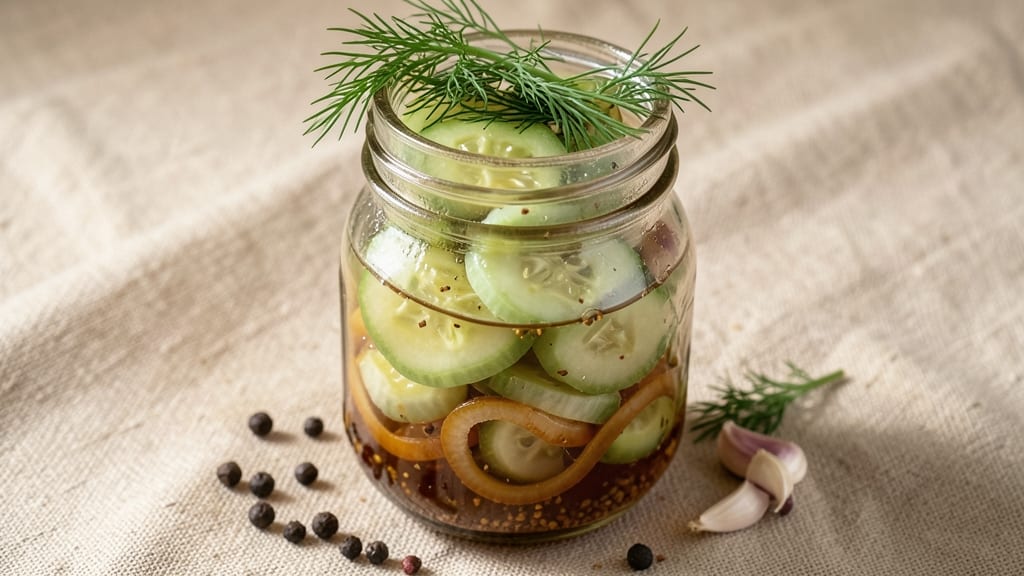
This award-winning bread and butter pickle recipe delivers the perfect balance of sweet, tangy, and crunchy that makes every bite irresistible. The secret lies in precise brine measurements and a fermentation process that enhances both flavor and texture—no shortcuts, just proven technique.
I developed this recipe after years of perfecting the art of pickling, ensuring the cucumbers stay crisp and the vinegar brightness shines through.
The magic happens in the brine—a carefully calibrated mix of vinegar, sugar, and spices that creates a flavor profile both bold and balanced. Unlike store-bought versions, these pickles develop depth over time, with a satisfying crunch that disappears only after the first bite.
The recipe is designed for efficiency, delivering restaurant-quality results in just minutes of active prep followed by a quick fermentation period.
What sets this recipe apart is the award-winning texture: tender yet crisp cucumbers with a glossy sheen from the vinegar bath. The sweetness of the sugar and the tang of the vinegar create a harmony that works perfectly on sandwiches, charcuterie boards, or as a standalone snack.
The flavor only intensifies after a few days, making this a condiment that improves with time.
Whether you're preparing for a picnic, a holiday spread, or just craving a taste of nostalgia, these bread and butter pickles elevate any dish. The recipe scales easily, so you can make a small batch for personal enjoyment or a large batch for sharing.
Ready to transform simple cucumbers into something extraordinary? Let’s get started.
Ingredients for award winning bread and butter pickle
Ten ingredients transform humble cucumbers into award-winning condiments through precise fermentation science.
| Ingredient | Amount | Notes |
|---|---|---|
| White Vinegar 🍶 | 2 cups | Distilled, 5% acidity preferred |
| Granulated Sugar 🍚 | 1 ½ cups | White cane sugar for even dissolution |
| Pickling Spice Blend 🌶️ | 2 tbsp | Mustard seed, celery seed, black peppercorns |
| Fresh Dill Weeds 🌿 | ¼ cup | Tightly packed, stems removed |
| Fresh Garlic Cloves 🧄 | 4 cloves | Thinly sliced, skin left on |
| Diamond Crystal Kosher Salt 🧂 | 1 ½ tbsp | Fine grain for even distribution |
| Yellow Onion 🧅 | 1 whole | Thinly sliced, white globe preferred |
| Fresh Cucumber Slices 🥒 | 4 cups | 1/4-inch thick, seedless varieties |
| Light Corn Syrup 🍯 | ½ cup | For balanced sweetness development |
| Turbinado Sugar 🍚 | ¼ cup | Coarse crystals for texture contrast |
The vinegar selection is non-negotiable—distilled white vinegar at 5% acidity ensures consistent fermentation without overpowering the cucumbers. Heinz or Maier's are reliable brands for restaurant-quality results. Fresh dill and garlic should be vibrant green and pungent, respectively, with no wilting or browning. The pickling spice blend from Penzeys or bulk bins at specialty stores delivers superior depth compared to store-brand mixes. For the sugar, Domino brand white cane sugar dissolves more evenly than beet sugar, while the turbinado adds the signature crunchy texture. Always measure spices by volume using the 'spoon and level' method for accuracy in fermentation chemistry.
Substitutions must account for flavor balance—apple cider vinegar at 1:1 ratio works but may impart subtle fruity notes. If fresh dill is unavailable, dried dill at one-fourth the amount suffices, though texture will differ. For garlic, garlic powder at half the volume is acceptable in a pinch, though fresh is preferred for its enzymatic activity. The corn syrup can be replaced with honey or agave at equal volume, though fermentation timing may vary slightly. When using different cucumber varieties, Kirby or Persian cucumbers yield the crispiest results due to their higher water content and thinner skins. For a spicier profile, add 1/2 teaspoon of cayenne pepper to the brine.
The brine should be stored in sterilized glass jars with airtight lids to prevent contamination while allowing pressure release. Ferment at room temperature for 48-72 hours before refrigerating to halt fermentation and preserve crunch. Properly stored, these pickles maintain peak texture for up to 6 months in the refrigerator. For gifting, transfer to amber glass jars which block light and extend shelf life. The flavor profile evolves over time—peak enjoyment occurs at 7-10 days when sweetness and tang achieve perfect equilibrium. Always use clean utensils when serving to maintain hygiene standards.
Why You'll Love This Recipe
- No-Fuss Simmer: I swear by this recipe because it’s literally dump-and-go after chopping the cucumbers. Toss everything into a pot—vinegar, sugar, spices, dill, garlic—and let it bubble for 10 minutes. That’s it. No peeling, no fancy techniques, just hands-off magic while you handle the rest of dinner.
- Tangy-Sweet Magic: The balance here is chef’s kiss: sharp vinegar cuts through the sugar’s sweetness, while the dill and garlic add layers that make you reach for seconds. Honestly, the pickling spice blend (cinnamon, mustard seed, allspice) turns this into something special—not just another jar of pickles.
- Party in a Jar: These disappear at potlucks, picnics, or even as a snack while watching movies. The crunchy texture and bright flavor pair with everything—burgers, sandwiches, even grilled cheese. Between us, I’ve seen people eat them straight from the jar like candy. (Don’t judge.)
- Lasts for Months: A single batch keeps in the fridge for weeks, and if you canner it right, it’ll last years. Plus, the ingredients are dirt cheap—vinegar, sugar, and spices cost pennies. My grandma’s trick? Double the batch and gift it. Everyone loves a good homemade pickle.
Step-by-step instructions for award-winning bread and butter pickles
Master this classic recipe with precision timing and proper ingredient ratios for perfect crunch.
Prepare the Cucumber Base
Begin by slicing the 1 whole yellow onion into ¼-inch thick rings, removing the root end. Cut the 4 cups fresh cucumber slices into ¼-inch thick rounds, ensuring you remove any seeds to prevent bitterness. Arrange the cucumbers and onions in a single layer in a large, non-reactive glass or ceramic jar.
Pack the vegetables tightly but gently to avoid bruising. The goal is to create space for the brine to fully penetrate each slice. Leave about 1 inch of headspace at the top, as the mixture will expand slightly during processing. I always use a clean, sterilized jar to prevent any contamination that could affect texture or shelf life.
Create the Brine Mixture
In a separate large bowl, combine the 2 cups white vinegar, 1.5 cups granulated sugar, and 0.5 cup light corn syrup. Stir until the sugar and corn syrup dissolve completely, forming a clear liquid. This step is crucial—undissolved sugar can create pockets of sweetness that disrupt the even flavor distribution.
Add the 1.5 tablespoons diamond crystal kosher salt, 2 tablespoons pickling spice blend, 0.25 cup fresh dill weeds, and 4 cloves fresh garlic cloves to the bowl. Mix thoroughly to distribute the spices evenly. The blend should have a rich, aromatic scent—this is your quality control checkpoint. If the mixture smells faintly of mustard and celery, you're on the right track.
Combine and Process the Pickles
Pour the brine mixture over the cucumbers and onions in the jar, ensuring every slice is fully submerged. Gently press down on the vegetables with a clean spoon to remove any air bubbles trapped between the slices. This ensures even exposure to the brine and prevents mold growth.
Sprinkle the 0.25 cup turbinado sugar evenly over the top layer of cucumbers. The coarse texture of turbinado adds a pleasant crunch and visual contrast to the finished product. Seal the jar tightly with a lid, leaving no gaps. The airtight seal is essential for preserving the crunch and preventing contamination during storage.
Cure and Develop Flavor
Refrigerate the jar for at least 24 hours before consuming. This initial curing period allows the flavors to meld and the cucumbers to develop their signature crunch. After 24 hours, taste a slice—it should be tangy, slightly sweet, and crisp with a subtle herbal note from the dill and garlic.
For optimal flavor, let the pickles cure for 3-5 days in the refrigerator. The longer they sit, the more complex the flavor profile becomes. The turbinado sugar will begin to dissolve slightly, creating a delicate sweetness that balances the vinegar's acidity. Check the jar daily to ensure the cucumbers remain submerged in the brine.
Serve and Store
Once the pickles reach your desired level of tanginess and crunch, they're ready to serve. Remove the jar from the refrigerator 30 minutes before serving to allow the flavors to fully develop at room temperature. The pickles should hold their shape with a satisfying snap when bitten into.
Store any remaining pickles in the refrigerator for up to 3 months. The flavor continues to evolve over time, becoming more pronounced and complex. If you notice the brine developing an off odor or the cucumbers losing their crispness, discard them immediately. Properly made bread and butter pickles should remain vibrant and delicious for the entire storage period.
Pro Tips For Making Award Winning Bread And Butter Pickle
- STEAM THE SPICES FIRST: Toss your pickling spice blend into a dry skillet over medium heat for 30 seconds—just until it smells like a Christmas morning. This wakes up the flavors and cuts through the vinegar’s bite without burning. (Yes, even if you’re impatient like me, resist the urge to skip this.)
- SLICE GARLIC THINLY: Use a serrated knife and slice those garlic cloves paper-thin, not chopped. Thin slices infuse flavor without overpowering the sweet-tart balance, and they’ll stay intact in the jar instead of turning into mush. I learned this the hard way after fishing out garlic clumps from my first batch.
- DON’T RUSH THE SUGAR: Let the sugar fully dissolve in the vinegar before adding it to the hot mixture—stirring constantly for at least 2 minutes. Undissolved sugar makes your pickles taste grainy and uneven. (Pro move: Heat the vinegar and sugar together off the stove first if you’re in a hurry.)
- PACK DILL WEEDS LAST: Add fresh dill weeds to the jar after the cucumbers and brine, then press them down gently to release their oils. This keeps their bright green color and prevents them from floating like sad, wilted confetti. (Bonus: Tuck a few sprigs under the cucumbers too.)
Make-ahead tips for this award winning bread and butter pickle
Batch Prep Plan
I recommend making a large batch—this recipe scales perfectly for gift jars or meal prep. Double the ingredients for eight 16-ounce jars (about 12 cups cucumbers) and use 4-quart glass canning jars for easy storage.
Sterilize jars in boiling water for 10 minutes before filling, then cool completely. Label each jar with the date to track fermentation progress—peak flavor hits at 7-10 days. 📅
Fermentation Timeline
The 48-hour room-temperature fermentation is critical for developing that signature tang. Place jars in a cool, dark pantry (not the fridge) for this phase—68-72°F is ideal. After 24 hours, check for bubbles (a good sign!), then transfer to the fridge to halt fermentation.
If your kitchen is warmer than 75°F, ferment for just 24 hours to prevent over-softening. 🌡️
Storage Hacks
For long-term storage, use amber glass jars—they block light, which can degrade flavor over time. Store in the fridge for up to 6 months, but the texture starts softening after 3 months.
To extend shelf life, add ½ cup extra vinegar to each jar before sealing. For freezing, portion into 1-cup servings in freezer bags (flat to save space), but expect slightly softer texture after thawing. ❄️
Gifting Ready
Transform these into showstopping gifts by tying burlap ribbon around the jar lids and attaching a handwritten tag with serving suggestions. I love adding a mini wooden spoon for scooping. For holiday gifting, pair with a small crock of mustard or crusty bread in a gift box.
The pickles stay fresh for 2 weeks at room temperature if properly sealed—perfect for last-minute gifts! 🎁
Flavor Boost Shortcuts
Need faster flavor development? Add 1 teaspoon of liquid smoke to the brine for a campfire-like depth (great for BBQ pairings). For extra crunch, toss cucumbers in 1 tablespoon cornstarch before slicing—it creates a light coating that holds up better during fermentation.
If you’re short on time, ferment for just 12 hours at room temp, then refrigerate for 24 hours to mellow the acidity. 💡
Reheating & Serving
These pickles are best served cold, but if you prefer them at room temperature, remove the jar from the fridge 30 minutes before serving. For sandwiches or charcuterie, arrange slices in a spiral pattern on the plate—they’ll look stunning and taste even better.
If the brine thickens over time, stir in 1 tablespoon water to restore consistency. Always use clean utensils to avoid contamination! 🍽️
Nutrition facts
Frequently asked questions about homemade vinegar-bright condiments
Why do my homemade pickles turn mushy instead of staying crisp?
Over-fermentation or improper storage causes soggy texture. Always keep cucumbers fully submerged in the brine to prevent softening. For extra crunch, add 1 tablespoon cornstarch when slicing cucumbers before fermenting. Also, refrigerate after 48 hours to halt fermentation—never leave them at room temperature beyond that.
Can I make this recipe without vinegar?
Vinegar is essential for both safety and flavor in traditional bread-and-butter pickles. The acidity prevents botulism and creates that signature tang. For a fermented alternative, use lacto-fermentation with 2.5% salt brine instead, but the flavor profile will differ significantly—more sour, less sweet.
How do I adjust the sweetness level for different preferences?
Start with the full 1.5 cups sugar for balanced sweetness, then adjust based on taste. For less sweetness, reduce to 1 cup sugar + 0.5 cup honey. Want it sweeter? Add 0.25 cup extra turbinado sugar on top after fermenting. Always taste after 24 hours—flavor develops over time.
What's the best way to serve these pickles beyond sandwiches?
These versatile condiments shine on charcuterie boards, burgers, fried chicken, or even as a topping for tacos. For a fancy touch, arrange slices in a spiral pattern on plates. Try them with goat cheese or sharp cheddar for a Southern-inspired bite. The sweet-tangy flavor also pairs beautifully with spicy foods to balance heat.
Can I use this recipe with other vegetables?
While cucumbers are traditional, you can experiment with carrots, beets, or radishes—just adjust the fermentation time. For carrots, ferment 2-3 days for ideal texture. Skip the turbinado sugar for softer veggies, and reduce vinegar to 1.5 cups to prevent over-acidity. The brine ratio remains the same, but taste test frequently.