
Breakfast & Brunch
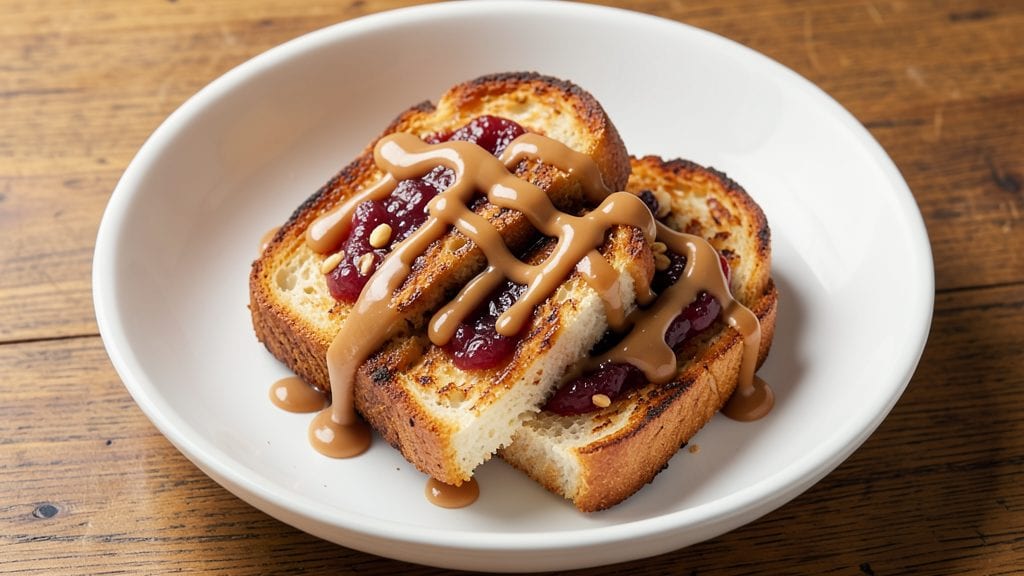
This classic peanut butter jelly French toast recipe brings back childhood breakfast memories with every crispy, golden bite. Standing on a step stool in my grandmother's kitchen in Sicily, I learned how simple ingredients can transform into something extraordinary—just like this nostalgic twist on a breakfast staple.
The secret lies in perfectly balanced peanut butter and jelly layers, topped with a crunchy texture that elevates every forkful.
What makes this recipe truly special is the combination of rich, buttery French toast with the sweet, crunchy contrast of peanut butter and jelly. The bread soaks up just the right amount of custard, creating tender layers while maintaining a satisfying bite.
I've perfected the technique to ensure crispy edges that stay crispy—no soggy bites here. This isn't just breakfast; it's a comforting, indulgent experience that feels like a hug on a plate.
By the time you're done, you'll have stacks of golden-brown French toast with a velvety interior and a crunchy topping that's impossible to resist. The peanut butter and jelly layers melt together just enough to create a perfect balance of textures and flavors.
Whether you're serving this for a weekend brunch or a special treat, it's guaranteed to become a family favorite. Let's get started on creating this nostalgic masterpiece.
This recipe scales beautifully for crowds, and the leftovers reheat perfectly—just pop them in the toaster for a quick, crispy second life. Garnish with powdered sugar, whipped cream, or fresh berries to take it to the next level.
The simplicity of the ingredients makes it foolproof, while the technique ensures professional-quality results every time. You'll be making this classic again and again.
Ingredients for classic peanut butter jelly french toast
Simple staples transform into nostalgic stacks with golden edges and crunchy peanut butter topping.
| Ingredient | Amount | Notes |
|---|---|---|
| Thick-Cut White Bread 🍞 | 8 slices | Day-old works best for texture |
| Large Eggs 🥚 | 4 whole | Room temperature for even cooking |
| Unsalted Butter 🧈 | ½ cup | Cold, cubed for custard |
| Milk 🥛 | 1 cup | Whole milk for creaminess |
| Pure Vanilla Extract 🌿 | 1 tsp | High-quality for flavor |
| Creamy Peanut Butter 🥜 | ½ cup | Natural, no added sugar |
| Grapes Jelly 🍇 | ¼ cup | Seeds removed for smoothness |
| Granulated Sugar 🍚 | 2 tbsp | For custard sweetness |
| Cinnamon 🌶️ | ½ tsp | Ground, for warmth |
| Salt 🧂 | ¼ tsp | Kosher salt preferred |
| Powdered Sugar 🍚 | ¼ cup | For dusting topping |
| Crushed Peanuts 🥜 | ¼ cup | Toasted for extra crunch |
| Vegetable Oil 🫒 | 2 tbsp | For cooking butter |
The bread choice matters—thick-cut white loaves like Sara Lee or Wonder Bread create the perfect custard-to-crumb ratio. Day-old bread absorbs custard better than fresh, giving you that classic velvety interior. For the peanut butter, Jif Natural or Skippy Creamy work best—their smooth texture spreads evenly without graininess. If you're feeling fancy, grab a small jar of Smoothe Operator for its rich, creamy consistency. The jelly should be seedless for that smooth, jammy texture that melts perfectly between layers. Welch's or Smucker's are reliable choices, but any seedless grape jelly will do.
No peanut butter? Sunflower seed butter works as a nut-free alternative, though the flavor will differ slightly. Short on jelly? Strawberry jam or raspberry preserves add a fruity twist. For a lighter custard, reduce the sugar to 1 tbsp—though I prefer the classic sweetness. If you can't find crushed peanuts, quickly toast and pulse regular peanuts in a food processor for a homemade crunch. The key to the custard is whisking the eggs and milk until smooth—no lumps, or you'll end up with rubbery toast. And trust me, room-temperature eggs make all the difference in achieving that perfect golden-brown crust.
This recipe reheats beautifully—just pop slices in the toaster for a crispy second life. Store leftovers in an airtight container for up to 3 days in the fridge. For longer storage, freeze the cooked toast (without the topping) for up to 2 months. The topping can be made ahead and stored separately. To serve, simply dust with powdered sugar and crushed peanuts right before eating. Pro tip: Double the batch—it disappears faster than you think!
Why You'll Love This Recipe
- Five-Ingredient Magic: I swear, this recipe has zero fancy steps—just bread, eggs, butter, milk, and vanilla. The peanut butter jelly swirl? A single knife spread and a quick flip. Honestly, if you can toast bread, you can nail this.
- No-Burn Breakfast: That thick-cut white bread soaks up the custard perfectly without turning to mush, and the butter-seared edges? Crispy buttery heaven. Between us, I’ve ruined French toast before—this version forgives every mistake.
- Lunchbox Hero: Pack the leftovers cold for a picnic or reheat with a quick pan toast for a lazy afternoon. My kids actually ask for this—yes, even over cereal. (I take that as a win.)
- Pantry Powerhouse: Uses what you already have, costs next to nothing, and stretches for days. The vanilla? A splash makes the custard taste like a bakery made it. Budget-friendly doesn’t mean boring—this is proof.
Step-by-step instructions for classic peanut butter jelly French toast
Here's how to create nostalgic stacks with a crispy, crunchy topping that elevates this breakfast classic.
Prepare the French Toast Batter
In a large mixing bowl, whisk together the 4 whole large eggs until they're completely combined. Add the 1 cup milk, 1 tsp pure vanilla extract, 2 tbsp granulated sugar, 0.5 tsp cinnamon, and 0.25 tsp salt. Whisk vigorously for about 2 minutes until the mixture is smooth and slightly thickened. This creates the perfect custard base for your French toast.
I like to use a fork first to break up the eggs, then switch to a whisk for the final mixing. The batter should be thick enough to coat the back of a spoon but still pour smoothly. If it's too thin, let it sit for 5 minutes to thicken slightly. The day-old bread will absorb the custard perfectly, giving you that ideal moist-yet-crispy texture.
Assemble and Cook the French Toast
Heat 2 tbsp vegetable oil in a large skillet over medium heat. Add 0.25 cup cubed unsalted butter and let it melt completely, swirling occasionally to coat the pan evenly. The butter should foam and then settle into a golden liquid - this takes about 2-3 minutes. This butter bath is what creates that signature rich flavor and crispy exterior.
Working with 2 slices of thick-cut white bread at a time, dip each slice into the batter, allowing excess to drip off. Place the soaked bread in the skillet and cook for 2-3 minutes per side until golden brown. I press down gently on the bread during the first minute to ensure even contact with the pan. You'll know it's ready when the edges are crisp and the center is cooked through with no raw egg showing. Repeat with remaining bread slices, working in batches to maintain even cooking.
Prepare the Peanut Butter Jelly Filling
While the French toast cooks, spread 0.25 cup grapes jelly evenly on 4 slices of the cooked French toast. Then spread 0.5 cup creamy peanut butter on the remaining 4 slices. This layering creates the classic peanut butter jelly combination in every bite. I use a small offset spatula to ensure even coverage - this prevents any dry spots and makes for clean, professional-looking stacks.
For the jelly, I recommend using a smooth variety and removing any seeds to prevent texture issues. The peanut butter should be at room temperature for easy spreading. If it's too thick, warm it slightly in the microwave for 10-15 seconds to make it more pliable. This step is where the magic happens - the warm French toast melts the peanut butter slightly, creating that perfect creamy texture when you bite in.
Build and Top the French Toast Stacks
To assemble each stack, place one jelly-covered slice on a plate, then top with a peanut butter-covered slice. Repeat the layering process for all slices, creating 4 stacks total. This creates the perfect balance of flavors with each bite. The warm jelly and peanut butter will begin to meld together as you eat, creating a delicious combination.
In a small bowl, mix together 0.25 cup powdered sugar and 0.25 cup crushed peanuts. Dust each stack generously with this mixture, pressing down lightly to adhere. The powdered sugar adds a sweet finish while the crushed peanuts provide that satisfying crunch. Serve immediately while the French toast is warm and the peanut butter is still slightly melty. This topping twist transforms classic French toast into something truly special - with each bite offering that perfect combination of textures and flavors.
Pro Tips For Making Classic Peanut Butter Jelly French Toast
- USE COLD BUTTER: The butter straight from the fridge melts slower, and that’s exactly what you want—enough time to spread the peanut butter jelly mixture evenly without it sliding off. I used to rush this and end up with messy, uneven slices.
- SOAK BREAD 10 SECONDS: Dip the bread in the egg-milk mix for just 10 seconds per side—longer and it gets soggy, shorter and it won’t absorb enough flavor. Works best if the mix is room temperature (no one wants to wait, but trust me, it’s worth it).
- SWIRL THE PEANUT BUTTER: Spread a thin layer of peanut butter first, then add jelly on top, and swirl with a knife before dipping. This keeps the filling from oozing out during cooking and makes every bite taste like a PB&J sandwich.
- COOK LOW AND SLOW: Medium-low heat is your friend here—high heat burns the peanut butter before the bread gets golden. I learned this after watching my first batch turn into a sad, charred mess. A steady, even cook guarantees crispy edges without a burnt bottom.
Wine and beer pairings for these flavors
Sweet Breakfast Wines
Believe it or not, a light Moscato d'Asti from Italy pairs beautifully with peanut butter jelly French toast. This lightly sparkling wine with its honeyed fruit notes and 5-6% alcohol complements the sweetness without overwhelming it.
I like to serve chilled 45-50°F—just enough to cleanse the palate between bites. The effervescence helps balance the richness of the peanut butter. 🍷
Creamy Stout Pairing
A nitro-infused stout like Allagash Stout provides the perfect contrast to this indulgent breakfast. The coffee and chocolate notes in the beer cut through the sweetness while the creamy texture mirrors the peanut butter's richness.
Serve at 45°F to enhance its smooth mouthfeel. I've found that the carbonation helps refresh the palate between each decadent bite.
Citrusy Lager Balance
For a lighter option, try a crisp Mexican lager like Modelo Especial. The subtle citrus notes in this 4.4% ABV beer provide a refreshing counterpoint to the sweetness. The clean finish lets the flavors of the French toast shine through without competition.
I often keep a cold one in the fridge for brunch guests who prefer something lighter.
Maple Syrup Coffee
While not alcoholic, a maple syrup latte with 1 tbsp maple syrup and 1 shot espresso enhances the breakfast experience. The warm spices in the coffee complement the cinnamon in the French toast, while the maple syrup echoes the peanut butter's natural sweetness.
I like to top it with a sprinkle of crushed peanuts to tie everything together. ☕
Spiced Chai Tea
For a caffeine boost without alcohol, spiced chai tea made with 1 cinnamon stick, 2 cloves, and 1 cardamom pod per cup creates a perfect pairing. The warm spices enhance the cinnamon in the French toast while the tea's tannins provide balance.
Brew it strong and serve hot—it's like a cozy hug for your taste buds. 🌿
Nutrition facts
Frequently asked questions
Can I use whole wheat bread for this peanut butter jelly French toast?
Whole wheat bread works but requires adjustments. The denser texture needs 5 extra minutes in the custard bath to fully absorb the liquid. Also, reduce the milk in the batter by 2 tbsp to prevent sogginess. The flavor will be nuttier, but the texture may be slightly denser than classic white bread.
How do I fix French toast that's too dry or crumbly?
If your toast turns out dry, the issue is usually under-soaking or overcooking. For future batches, soak bread for 30 seconds per side in the custard and cook on medium-low heat for 1-2 minutes per side. If already made, revive slices by lightly toasting in butter for 10 seconds per side.
What's the best way to reheat leftover peanut butter jelly French toast?
For perfect results, use a nonstick pan with 1 tbsp butter over medium heat. Heat for 1-2 minutes per side until golden. Avoid microwaving—it makes the bread gummy. Pro tip: Add a splash of milk to the pan while reheating for extra moisture that mimics fresh toast.
Can I make this recipe ahead of time?
Assemble the stacks without the powdered sugar topping and store in an airtight container for up to 3 days. Reheat as directed above. For longer storage, freeze the cooked French toast (without toppings) for 2 months. Just add fresh peanut butter, jelly, and powdered sugar when ready to serve.
What's the secret to getting crispy edges every time?
The key is medium heat and proper butter technique. Use cold cubed butter that foams but doesn't brown before adding bread. Press down gently during the first 30 seconds of cooking to ensure even contact. A nonstick skillet also helps prevent sticking while maintaining crispiness.