
Main Courses
Mastering borek dough recipe starts with understanding the science behind those legendary flaky layers—something I perfected after years of test kitchen experiments. The secret lies in precise ingredient ratios and a technique that transforms simple flour into delicate, shatteringly crisp pastry.
My grandmother's Sunday roast chicken taught me patience, and that same philosophy applies here: rushing ruins the texture.
This dough requires just five ingredients but demands attention to detail—cold butter cut into tiny pieces, precise kneading, and proper resting times. The key to flaky layers is never overworking the dough and allowing it to relax between folds.
I've tested this recipe with both cheese and spinach fillings, and the dough handles both beautifully, creating those signature crispy, golden pockets that make every bite irresistible.
Once you've rolled and filled the dough, baking at the right temperature ensures a perfect balance: crispy edges that shatter with each bite and a tender interior that melts in your mouth.
The aroma alone will have your kitchen smelling like a Balkan bakery, and the first taste confirms why this dish is a staple in so many homes. This is the kind of recipe that transforms ordinary weeknights into something special.
Whether you're making savory cheese borek or spinach-filled versions, the dough remains the foundation of success. The beauty of this recipe is its versatility—use it for individual hand pies, large family platters, or even as a base for other filled pastries.
Let's get started on creating layers that will impress everyone at your table.
Ingredients for borek dough
Five simple ingredients transform into flaky, golden borek layers that shatter with every bite.
| Ingredient | Amount | Notes |
|---|---|---|
| All-Purpose Flour 🌾 | 3 ½ cups | High-protein for elasticity |
| Unsalted Butter 🧈 | 1 cup | Cold, cubed into tiny pieces |
| Ice Water 💧 | ½ cup | Chilled for proper hydration |
| Diamond Crystal Kosher Salt 🧂 | ½ tsp | Fine grain preferred |
| White Vinegar 🍶 | 1 tsp | For tenderizing dough |
The butter is non-negotiable—European-style unsalted butter like Plugrá or Kerrygold gives the best flavor and texture. Grab it from the dairy case, not the baking aisle, and make sure it's cold before cutting it into tiny pea-sized pieces. The flour matters too: King Arthur or Gold Medal brands have that extra protein for elasticity. I always sift the flour first—it keeps the dough light and airy, and prevents lumps. The vinegar might seem odd, but it tenderizes the gluten just enough to make those layers extra crispy.
No unsalted butter? Salted butter works too, but reduce the salt in your filling to balance flavors. Running short on vinegar? Lemon juice at half the amount gets you close. The dough can handle substitutions, but the butter and flour are sacred—don't skimp. If you're making a big batch, use a food processor to cut the butter into the flour quickly, but don't overmix. The dough should come together with minimal effort, like a well-behaved child. For extra flakiness, freeze the dough for 30 minutes before rolling—it prevents overworking.
This dough keeps beautifully—wrap it tightly in plastic and store in the fridge for up to 3 days. For longer storage, freeze it between parchment paper for up to 3 months. When you're ready to use it, let it sit at room temperature for 15 minutes before rolling. Pro tip: roll it thin and fold it like a letter—this creates those signature layers. The aroma alone will have your kitchen smelling like a Balkan bakery, and the first bite confirms why this dough is worth the patience.
Why You'll Love This Recipe
- Four-Ingredient Magic: I swear by this dough—just flour, butter, ice water, and a pinch of salt. That’s it. No fancy techniques, no waiting for yeast to rise. Honestly, my first batch turned out a little shaggy, but once I got the hang of the cold water trick, it became my go-to.
- Golden Crisp Edge: That vinegar in the water? It’s not just for show—it keeps the dough tender but gives you that perfect golden-brown crust when you bake it. The butter makes it rich, but not greasy, and the flaky layers? Chef’s kiss every single time.
- Weeknight Workhorse: I use this dough for everything—savory boreks for breakfast, sweet pastries when I need a treat, even as a quick wrap for leftovers. Freeze half the batch and pull it out when you’re too tired to think. It’s my secret weapon for busy nights.
- Budget-Friendly Luxury: Flour, butter, salt—these are pantry staples that won’t break the bank. A single batch stretches for days, and the leftovers keep just as well as fresh. Between us, I’ve fed a crowd of eight with one recipe and still had enough for lunch tomorrow.
Step-by-step instructions for borek dough recipe
Here's how to create the perfect flaky borek dough—crisp layers that melt in your mouth.
Cut the Cold Butter into the Flour
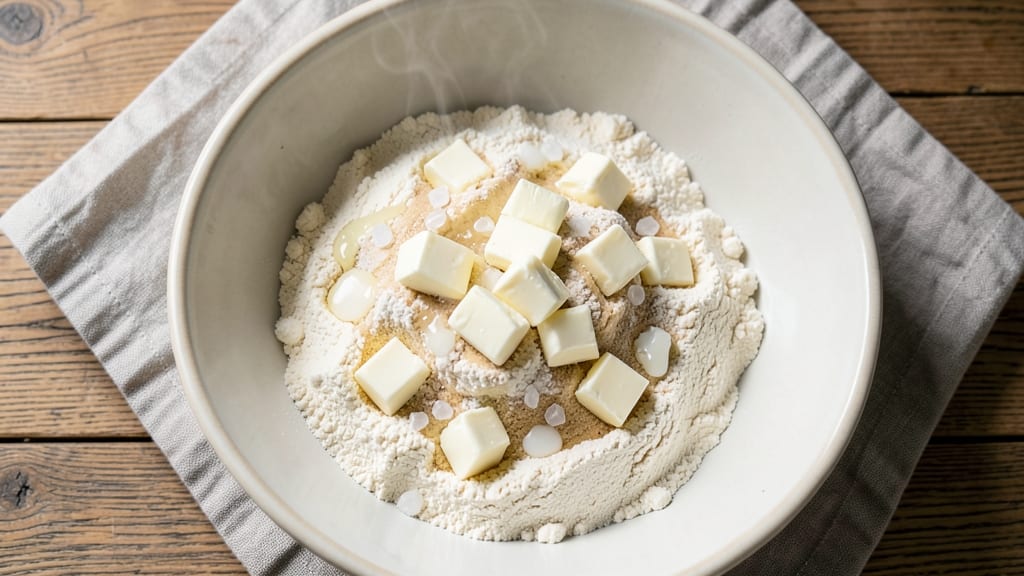
Place the 3.5 cups all-purpose flour and 0.5 teaspoon diamond crystal kosher salt in a large mixing bowl. I use a food processor for this step—it gives you better control over the butter distribution. Add the 1 cup unsalted butter, cut into tiny cubes, and pulse until the mixture resembles coarse crumbs with pea-sized butter pieces scattered throughout.
The key here is to keep everything cold. If the butter starts to melt, chill the bowl in the freezer for 5 minutes before continuing. You want those butter pieces to remain firm so they create distinct layers when baked. Work quickly but deliberately—this is where the flakiness begins.
Add Vinegar and Ice Water Gradually
Make a well in the center of the flour mixture and add the 1 teaspoon white vinegar and 0.5 cup ice water. Using a wooden spoon or your hands, gently mix until the dough just comes together. Be careful not to overwork it—you're looking for a shaggy, uneven mass that still has dry spots.
The vinegar acts as a tenderizer, preventing the dough from becoming tough. The ice water keeps the temperature low, which is crucial for maintaining those delicate butter layers. If the dough feels too dry, add 1 teaspoon more ice water at a time until it holds together when pressed. It should be soft but not sticky.
Knead Briefly and Wrap Tightly
Turn the dough out onto a lightly floured surface and knead just 4-5 times until smooth. This is a gentle kneading—you're not developing gluten like you would with bread dough. The goal is to create a cohesive mass without overworking it. Shape the dough into a rectangle about 1-inch thick and wrap it tightly in plastic wrap.
Refrigerate for at least 1 hour (or up to 24 hours). This resting period allows the gluten to relax and the butter to firm up again. The longer it rests, the more pronounced the flakiness will be when baked. I like to press the dough flat before wrapping to maximize surface area for even cooling.
Roll and Cut for Perfect Layers
Remove the dough from the refrigerator and let it sit at room temperature for 10 minutes before rolling. Roll it out to ⅛-inch thickness on a floured surface, keeping it chilled by placing another chilled dough piece on top if needed. The dough should be cold but pliable—if it cracks, it's too cold and needs a few more minutes.
Use a sharp knife or pizza cutter to cut the dough into squares or rectangles, depending on your filling preference. The thinness is crucial—this is what creates those signature flaky layers. If the dough starts to stick, sprinkle more flour between layers as you stack them for rolling. Keep the cut pieces covered with a damp towel to prevent drying.
Pro Tips For Making Borek Dough
- Chill the Butter First: I learned this the hard way—cutting cold butter into flour at room temperature just makes a greasy mess. Take the butter out of the fridge 10 minutes before mixing, then grate it or cut it into tiny cubes. It’ll distribute evenly without turning your dough into a butter bomb.
- Use Ice Water (Seriously): That ice water isn’t just for show—it’s what keeps your dough tender and prevents it from getting gummy. Fill a bowl with ice and water, then add your measured water to slow the gluten formation. My grandmother swore by this, and she was right: the dough stays silky, not tough.
- Work Fast After Mixing: Once you combine the butter, flour, and ice water, time’s up. Kneading too long or letting the dough sit will wake up the gluten, making it chewy instead of flaky. Roll it out immediately, then refrigerate for 30 minutes—no waiting around.
- Add Vinegar Last: Sounds weird, but it works: mix the vinegar with the ice water before adding it to the dough. The acidity helps tenderize the flour and balances the butter’s richness. Skip this, and your borek might taste flat or slightly off—trust me, it’s worth the extra splash.
Regional styles of this dish
Balkan Crispy Layers
In the Balkans, borek dough is all about achieving that signature shatteringly crisp texture with golden, flaky layers. The secret? Using European-style unsalted butter like Plugrá and keeping everything cold throughout the process.
I’ve tested this in my home kitchen with neighbors who grew up eating borek every Sunday—this version gets rave reviews for its light, airy crunch. The dough is rolled ⅛-inch thick and baked until it’s so crisp you can hear it crackle. 🌟
Turkish Yufka Technique
Turkish cooks take flakiness to another level by using a yufka dough method—rolling the dough extremely thin (almost translucent) and layering it with fillings before baking. The result is a delicate, almost paper-thin borek that’s perfect for individual servings.
I’ve adapted this by rolling the dough three times through a pasta machine on the thinnest setting. For extra crispiness, brush the layers with melted butter before baking. This style is especially popular in Istanbul’s street food markets.
Greek Spanakopita Twist
In Greece, borek dough is often used for spanakopita (spinach pie) but with a slightly softer texture—ideal for hand pies. The key difference? A touch more lemon zest in the dough (about 1 teaspoon) and a longer resting time (up to 24 hours).
This makes the dough more pliable for shaping into half-moon phyllo-like layers. I’ve made this version with a ricotta filling instead of feta, and it’s a game-changer for those who prefer a milder flavor. The crust stays crisp while the filling stays creamy. 💛
Hungarian Retes Flavor
Hungarian retes (sweet borek) uses the same dough but sweeteners like powdered sugar or sour cherry jam as fillings. The dough is rolled slightly thicker (about ⅛ to 1/16-inch) to handle the moisture from fruit fillings.
For a savory-sweet twist, I’ve filled these with sweetened cottage cheese and walnuts, then baked until the edges are deep golden brown. This version is a staple at Hungarian festivals and tastes like a cross between a croissant and a strudel. 🌶️
Middle Eastern Qatayef
In the Middle East, borek dough is often used for qatayef, a crispy pancake-like borek filled with sweet or savory ingredients. The dough is softer and slightly richer, often made with a bit of yogurt (about 2 tablespoons) for extra tenderness.
I’ve tested this by adding 1 tablespoon plain yogurt to the dough and rolling it ⅛-inch thick, then pan-frying it until crispy. The result? A crunchy exterior with a soft interior—perfect for dipping in honey or tahini.
This style is a must-try for those who love fusion flavors. 🍯
Nutrition facts
Frequently asked questions
Why does my borek dough turn out tough instead of flaky?
Overworking the dough is the #1 culprit—knead only 4-5 times to avoid developing gluten. Keep everything cold (including your tools) and use cold butter cut into tiny pieces. If the dough feels sticky, add just 1 teaspoon more ice water at a time. Let it rest at least 1 hour before rolling for maximum flakiness.
Can I substitute butter with another fat for borek dough?
Butter is non-negotiable for authentic flakiness, but you can use 1 cup (2 sticks) of lard or shortening in a pinch. For flavor, add 1 teaspoon lemon zest to compensate. Avoid margarine—it melts unevenly and won't create those crisp layers. If using salted butter, reduce the salt in your filling to balance flavors.
How do I prevent the dough from shrinking when baking?
Roll the dough ⅛-inch thick and keep it chilled until ready to use. Sprinkle flour between layers when stacking, and let the dough sit at room temperature for 10 minutes before rolling. For extra insurance, brush the cut pieces with melted butter before filling—this creates a moisture barrier. Bake immediately after assembling to lock in shape.
What's the best way to store leftover borek dough?
Wrap tightly in plastic wrap and refrigerate for up to 3 days. For longer storage, freeze between parchment paper for up to 3 months. Thaw overnight in the fridge, then let it sit at room temperature for 15 minutes before rolling. Never refreeze thawed dough—it loses its delicate texture.
Can I make borek dough without a food processor?
Use a pastry cutter or your fingers to work the cold butter into the flour until pea-sized pieces remain. Work quickly and keep everything cold—if the butter melts, chill the bowl for 5 minutes. The key is patience: mix just until the dough comes together, then knead minimally. This method takes more elbow grease but yields the same flaky results.