
Desserts
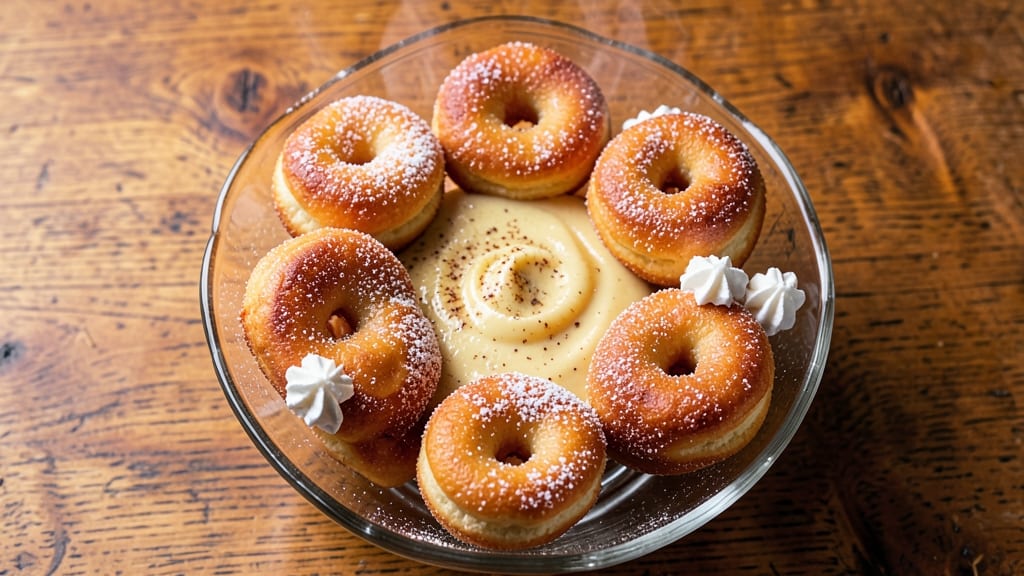
This custard donut recipe delivers the perfect balance of golden crispy shells and pillowy soft centers you've been craving. Standing on a step stool in my grandmother's kitchen in Sicily, I learned how to achieve that ideal texture—something I've perfected over years of baking.
The secret lies in a precise dough temperature and a rich vanilla custard that stays creamy even after frying.
The dough is simple to make with just flour, sugar, yeast, and a touch of salt, but the technique ensures those signature air pockets that make each bite irresistible.
Once fried to a golden brown, the donuts get filled with a smooth vanilla custard that's been tempered to stay thick and velvety. This isn't just another donut recipe—it's the kind that makes people ask for seconds.
By the time you're done, you'll have donuts with crispy exteriors that shatter slightly and centers that melt in your mouth. The custard filling adds a luxurious richness that turns a simple treat into something extraordinary.
Whether you're making them for a family gathering or just treating yourself, these donuts are worth every minute of effort.
Ready in about 2 hours from start to finish, this recipe is perfect for beginners but delivers restaurant-quality results. Let's get started on creating donuts that will impress everyone who tries them.
Ingredients for custard donut
Twelve simple ingredients transform into golden, pillowy donuts with creamy custard centers.
| Ingredient | Amount | Notes |
|---|---|---|
| All-Purpose Flour 🌾 | 4 cups | Sifted for light texture |
| Granulated Sugar 🍚 | 1 cup | Plus 2 tbsp for dough |
| Active Dry Yeast 🍞 | 2 ¼ tsp | 1 packet, not instant |
| Unsalted Butter 🧈 | ½ cup | Cold, cubed for dough |
| Large Eggs 🥚 | 2 whole | Room temperature |
| Milk 🥛 | ½ cup | Warm, not hot |
| Salt 🧂 | ½ tsp | Fine sea salt |
| Vegetable Oil 🫒 | 4 cups | For frying, 350°F |
| Vanilla Extract 🍶 | 1 tbsp | Pure, high-quality |
| Heavy Cream 🥛 | 1 ½ cups | Full-fat for custard |
| Egg Yolks 🥚 | 4 whole | Separated from whites |
| Cornstarch 🌾 | 2 tbsp | For thickening custard |
| Granulated Sugar 🍚 | ½ cup | For custard filling |
| Powdered Sugar 🍚 | ¼ cup | For dusting, optional |
The yeast matters here—Bob's Red Mill or Saf-Instant both work, but fresh yeast gives the best rise. For the flour, King Arthur or Gold Medal are my go-tos—they handle the slight gluten development needed for that perfect bite. Butter should be cold when you mix it in (wrap it in parchment before adding to the dough). The custard filling needs full-fat heavy cream—none of that light stuff. And trust me on the vanilla: Nielsen-Massey or McCormick Pure make all the difference. The custard also requires tempering the egg yolks to avoid scrambling—slowly mix the hot custard into the yolks, not the other way around.
No yeast? Instant yeast at half the amount works in a pinch, but the rise won't be as dramatic. Short on butter? Lard or shortening keeps the dough tender, though the flavor won't be as rich. For the custard, half-and-half plus extra cream can replace heavy cream if you're desperate, but it won't be as velvety. The custard can be made ahead and stored in the fridge for up to 5 days—just reheat gently before filling. And if you're feeling fancy, add a pinch of cinnamon or cardamom to the custard for extra depth. The donuts themselves can be frozen before frying (just add 5 minutes to the frying time when reheating).
The dough needs at least 2 hours to rise properly—don't rush it. Once fried, let the donuts cool for 10 minutes before filling, or the custard will leak out. Store filled donuts in an airtight container with parchment between layers—they stay fresh for 3 days at room temperature. For longer storage, freeze the filled donuts (unfrosted) for up to 2 months). Reheat in a 350°F oven for 10 minutes to restore that crispy shell. And if you're making these for a crowd, double the recipe—they disappear fast.
Why You'll Love This Recipe
- No Yeast Fuss: Honestly, I was skeptical about making donuts without a mixer—until I tried this. The dough comes together with just a bowl, a fork, and a little elbow grease (about 10 minutes max), and the yeast does all the heavy lifting while you sip your coffee.
- Buttery-Sweet Magic: That rich custard filling? It’s just eggs, sugar, and butter—no fancy ingredients, just pure comfort. The moment the hot donut hits the custard, you get that perfect balance of crispy outside and gooey, velvety inside. (Yes, even on a Tuesday night.)
- Breakfast or Dessert: Here’s what sold me—this recipe works for both. Serve them warm with a drizzle of maple syrup for breakfast, or dust with powdered sugar and a sprinkle of cinnamon for an after-dinner treat. My kids don’t even question why they’re eating dessert at 8 AM.
- Makes a Crowd (Cheaply): Between us, this recipe stretches to feed six for under $10. The leftovers? They actually stay fresh for days if you store them properly—no sad, dried-out donuts here. Freeze extras, and you’ve got a last-minute treat for when friends drop by.
Step-by-step instructions for custard donut recipe
Here's how to create donuts with that perfect balance of golden crispy shells and pillowy soft custard centers.
Prepare the Yeast Dough
In a large bowl, combine the 4 cups all-purpose flour, 1 cup granulated sugar, 2.25 teaspoons active dry yeast, and 0.5 teaspoon salt. Mix these dry ingredients together until evenly distributed. This creates a uniform base for your dough.
In a separate small bowl, warm the 0.5 cup milk to about 110°F - it should feel warm to your touch but not hot. Add the 0.5 cup cold unsalted butter and 2 whole large eggs to the warm milk, then whisk until fully combined. The butter should melt slightly but not become greasy.
Make a well in the center of your dry ingredients and pour in the wet mixture. Using a wooden spoon, gradually incorporate the wet ingredients into the dry until a shaggy dough forms. Once combined, turn the dough out onto a lightly floured surface and knead for about 8-10 minutes until smooth and elastic. The dough should be slightly tacky but not sticky - if it's too sticky, add a little more flour 1 tablespoon at a time until it reaches the right consistency.
Make the Custard Filling
While the dough rests, prepare the custard filling. In a medium saucepan, combine the 1.5 cups heavy cream, 4 whole egg yolks, 0.5 cup granulated sugar, 2 tablespoons cornstarch, and 1 tablespoon vanilla extract. Whisk everything together until smooth and well combined.
Place the saucepan over medium heat and cook, stirring constantly with a wooden spoon, until the mixture thickens to a pudding-like consistency. This should take about 5-7 minutes. You'll know it's ready when the mixture coats the back of a spoon and leaves a clear path when you run your finger through it. Remove from heat immediately and let it cool completely before using.
Shape and Proof the Donuts
Divide the dough into 12 equal pieces (about 2 ounces each) and roll each piece into a ball. Using your thumb, make a small indentation in the center of each ball, then place 1 teaspoon of the cooled custard filling into each indentation. Gently seal the dough around the filling to completely enclose it.
Place the filled dough balls on a lightly greased baking sheet, cover with a clean kitchen towel, and let them proof in a warm place for about 1-1.5 hours, or until they've nearly doubled in size. They should feel light and springy when pressed gently with your finger. If your kitchen isn't warm enough, place the baking sheet in a 200°F oven with the light on to help them proof more quickly.
Fry to Golden Perfection
Heat 4 cups vegetable oil in a deep fryer or heavy pot to 350°F. You'll want about 2-3 inches of oil in the pot. Test the temperature by dropping a small piece of dough in - it should sizzle and float to the surface within 30 seconds. If it sinks or doesn't bubble vigorously, the oil isn't hot enough.
Carefully place 3-4 donuts at a time in the hot oil, being careful not to overcrowd the pan. Fry for 1-2 minutes per side until they turn a deep golden brown color. Use tongs to turn them carefully - the donuts will be fragile as they cook. Remove them from the oil and drain on a wire rack or paper towel-lined plate. They should be crispy on the outside but still soft inside.
Dust and Serve
While the donuts are still warm, dust them generously with 0.25 cup powdered sugar using a fine-mesh sieve. This creates that classic donut look and adds a touch of sweetness. Let them cool for about 5 minutes before serving to allow the powdered sugar to settle.
Serve immediately for the best texture - the custard filling should be warm and gooey, while the exterior remains perfectly crisp. These donuts are best enjoyed fresh from the fryer, but you can store any leftovers in an airtight container at room temperature for up to 2 days. For longer storage, freeze them on a tray before transferring to a container, then reheat in a 350°F oven for 5-10 minutes to restore their crispiness.
Pro Tips For Making Custard Donut
- MEASURE YEAST PRECISELY: I learned this the hard way—weighing yeast instead of eyeballing it makes a real difference. A pinch too much means overproofed, gummy donuts; too little and they’ll stay dense. Use a kitchen scale for 7 grams (2¼ tsp) of active dry yeast, or level your teaspoon carefully.
- SOFTEN BUTTER TO ROOM TEMP: Cold butter makes tough donuts. Press it between two sheets of parchment, slice into ½-inch pieces, and let sit for 20 minutes while you mix other ingredients. It should dent when pressed but not melt—like a ripe avocado. (Yes, even if you’re impatient like me.)
- PROOF DONUTS UNTIL PEAKY: They’re ready when they’ve doubled and leave a clean dent that slowly fills back in. Poking them too soon collapses the gluten; waiting too long means they’ll taste flat. Cover with a towel to keep humidity up—this isn’t the time to rush.
- FILL CUSTARD BEFORE FRIED: Pipe the custard into the center of each donut immediately after frying, while they’re still hot. The heat seals the filling in better than waiting. Use a piping bag with a ½-inch tip—no need for fancy tools, just a plastic bag with a corner snipped off.
Troubleshooting great custard donut
Dough Too Sticky
If your dough feels too sticky during kneading, resist the urge to add too much flour at once. Instead, work in 1 tablespoon increments while kneading—this prevents over-drying.
I learned this trick from my Nonna in Sicily, who always said, "A little flour is like a little salt—too much ruins everything." If you're still struggling, chill the dough for 15 minutes before shaping; the cold helps firm it up. 💡
Custard Too Thin
The custard should coat the back of a spoon when done, but if it's too runny, you likely didn't cook it long enough. Keep stirring over medium heat for another 1-2 minutes—it thickens quickly at the end.
For extra insurance, mix 1 extra teaspoon cornstarch with 1 tablespoon cold water, whisk it in, and cook for 30 seconds. This slurry method fixes thin custard every time. 🥄
Donuts Sink While Frying
If your donuts sink instead of floating, your oil isn't hot enough. Test with a small dough scrap—it should sizzle and float within 30 seconds. If it sinks, wait 5 more minutes. I use a ThermoWorks thermometer to monitor 350°F—never guess.
Also, avoid overcrowding the fryer; 3-4 donuts at a time is ideal. Too many lower the oil temperature. 🔥
Filling Leaks Out
If custard leaks during frying, your dough wasn't sealed properly. Press the edges firmly around the filling when shaping, and don't overfill—1 teaspoon per donut is perfect. Also, let the donuts rest for 10 minutes after frying before dusting.
This gives the dough time to set slightly. I once ruined a batch because I was too eager—lesson learned! 😅
Donuts Too Dense
Dense donuts usually mean the dough didn't rise enough. Ensure your yeast is fresh (test it in warm water—it should foam in 5 minutes). Also, proof the dough in a warm spot (75-80°F is ideal).
If your kitchen is cold, use a 200°F oven with the light on to create a warm environment. Never skip the proofing time—rushing leads to dense results. ✨
Custard Curdles
Curdled custard happens when you add hot liquid to cold eggs too quickly. Always temper the eggs by whisking them with a little warm custard first, then slowly mix in the rest. If it's already curdled, strain it through a fine-mesh sieve to salvage it.
For extra protection, whisk the egg yolks with 1 tablespoon sugar before adding to the cream—this stabilizes the mixture. 🥛
Nutrition facts
Frequently asked questions about homemade custard donuts
Can I make these donuts without a deep fryer?
Use a heavy pot with at least 2-3 inches of oil and a candy or deep-fry thermometer to monitor 350°F. For an oven-baked version, brush the shaped donuts with oil and bake at 375°F for 12-15 minutes until golden. The texture will be slightly different but still delicious.
How do I store leftover custard donuts?
Keep them in an airtight container with parchment paper between layers for up to 2 days at room temperature. For longer storage, freeze the filled donuts (unfrosted) on a tray first, then transfer to a bag for up to 2 months. Reheat in a 350°F oven for 5-10 minutes to restore crispiness.
Can I use a different custard flavor?
Yes! Swap vanilla for chocolate (add 2 oz melted dark chocolate to the custard), caramel (replace 0.5 cup sugar with caramel sauce), or citrus (add 1 tbsp lemon or orange zest). Just ensure the custard reaches the same thick, pudding-like consistency.
Why did my custard turn grainy?
Overcooking or stirring too vigorously causes graininess. Remove the custard from heat as soon as it coats the back of a spoon and let it cool completely before using. For extra smoothness, whisk in 1 tbsp cold butter at the end.
Can I make these donuts gluten-free?
Yes, but with adjustments. Replace the flour with a 1:1 gluten-free baking mix and add 1 extra tbsp xanthan gum to the dough. The custard recipe remains the same, but gluten-free donuts may be slightly denser. Test the dough's consistency carefully—it won't behave exactly like wheat flour dough.