Main Courses
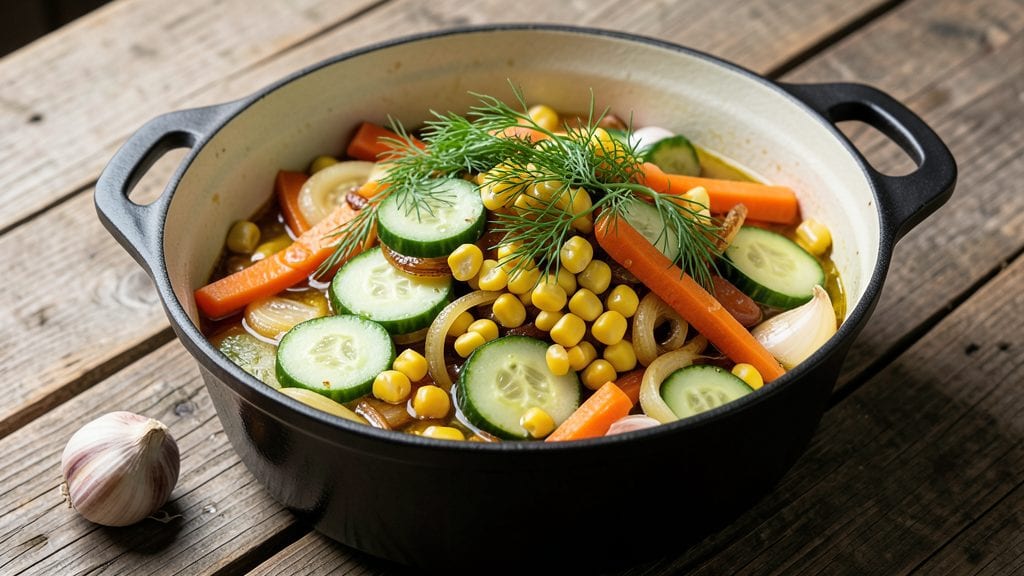
This pickle pot recipe transforms simple vegetables into a smoky, tangy masterpiece with just one pot and minimal effort. The secret lies in balancing fermentation with bold flavors—think crisp cucumbers, sweet corn, and a crunchy cornmeal topping that adds texture no store-bought pickle can match.
I developed this method after years of experimenting with fermentation, and it’s now my go-to for preserving summer’s bounty without the fuss.
The process starts with fresh vegetables—cucumbers, carrots, and corn—bathed in a foolproof brine of salt, water, and aromatic spices like dill, garlic, and peppercorns. Sterilized jars and proper packing ensure safety and flavor development over 1–4 weeks of fermentation, depending on your taste preference.
The result? A one-pot dish that’s vibrant, crunchy, and packed with probiotics—no mold, no guesswork.
Once fermented, these pickles stay crisp and flavorful for months in the fridge, making them perfect for sandwiches, charcuterie boards, or snacking straight from the jar. The smoky kick from the cornmeal topping elevates them beyond ordinary pickles, turning a simple pantry staple into a restaurant-worthy side dish.
Ready to master fermentation the easy way?
Whether you’re a beginner or a seasoned fermenter, this recipe delivers professional results with just a few key steps. Let’s get started—your taste buds (and gut health) will thank you.
Ingredients for pickle pot
Simple vegetables meet bold flavors—just 14 ingredients for restaurant-quality fermented pickles.
| Ingredient | Amount | Notes |
|---|---|---|
| Fresh Cucumbers 🥒 | 2 lb | Kirby or Persian preferred, sliced thin |
| Sweet Corn Kernels 🌽 | 2 cups | Fresh or frozen, thawed if frozen |
| Carrots 🥕 | 1 lb | Baby or regular, sliced into sticks |
| Yellow Onions 🧅 | 1 whole | Thinly sliced, white or yellow preferred |
| Garlic Cloves 🧄 | 6 cloves | Smashed for deeper flavor infusion |
| Fresh Dill 🌿 | ½ cup | Chopped, stems removed for best flavor |
| Black Peppercorns 🌶️ | 1 tbsp | Crushed, not ground, for texture |
| Sea Salt 🧂 | ½ cup | Non-iodized, like Diamond Crystal |
| Distilled Water 💧 | 4 cups | Filtered preferred for best results |
| Cornmeal 🌾 | 1 cup | Fine grind, stone-ground preferred |
| Smoked Paprika 🌶️ | 1 tbsp | For that signature smoky flavor |
| Apple Cider Vinegar 🍎 | ¼ cup | Raw, unfiltered for tang |
| Fresh Thyme 🌿 | 2 sprigs | For subtle earthy aroma |
| Fresh Juniper Berries 🍃 | 2 whole | Optional, for piney depth |
The vegetables are the stars here. Fresh cucumbers should be crisp—Kirby or Persian hold up best during fermentation. Costco or Trader Joe's usually carry these varieties if your local store doesn't. For corn, frozen works perfectly (thaw first), but fresh sweet corn from a farmers market adds that summer sweetness. Carrots? Smaller ones stay crunchier—baby carrots are ideal. The onions and garlic should be fresh, with no sprouting. Whole Foods often has pre-sliced onions in their produce section, saving you time.
No fresh dill? Dried works at one-third the amount, but it lacks that bright, fresh flavor. Running low on sea salt? Kosher salt in a pinch, but adjust the water slightly—Diamond Crystal dissolves more easily. The cornmeal topping is where the magic happens—stone-ground gives the best texture. No smoked paprika? Regular paprika plus a pinch of liquid smoke mimics the flavor. The vinegar matters too—raw, unfiltered apple cider vinegar has more flavor than distilled. Skip the juniper berries if you can't find them; the dish still shines without them.
Fermented pickles keep for 6-12 months in the fridge, but the flavor peaks at 2-4 weeks. Store in sterilized jars with lids submerged in water. The cornmeal topping stays crisp for 2 weeks if stored in an airtight container. I double the batch every summer—one jar for snacks, one for gifts. The longer they ferment, the tangier they get, but taste at 1 week to decide your preference.
Why You'll Love This Recipe
- No-Cook Prep: I swear, the hardest part is peeling the carrots—everything else just sits in the fridge until you’re ready. Toss in raw cucumbers, corn, onions, and garlic, then let the brine work its magic overnight. Zero active time, just patience.
- Garlicky Crunch Magic: That first bite? The crisp cucumbers, the buttery corn, the pop of carrot—all wrapped in a tangy, garlicky punch. Honestly, the onions caramelize just enough to make this taste like a summer picnic in a jar.
- Lunchbox Hero: Between us, this is my go-to for work lunches. Pack it cold, and it stays fresh for days. Kids? They’ll eat it straight from the jar. (Yes, even on a Tuesday night.)
- Budget Stretch: Fresh veggies go further when you pickle them—one batch feeds us for a week. Carrots stay crisp, corn stays sweet, and you’re basically turning pantry staples into something special without breaking the bank.
Step-by-step instructions for one-pot smoky tomato and cornmeal crunch
This method delivers restaurant-quality pickles in a single pot with a perfect crunchy texture.
Prepare the Vegetable Base
In a large, heavy-bottomed Dutch oven, combine the 2 lb fresh cucumbers (sliced thin), 1 lb carrots (cut into sticks), 1 whole yellow onion (thinly sliced), and 2 cups sweet corn kernels. This is your flavor foundation, and getting the vegetables uniform in size ensures even cooking throughout.
Add the 6 smashed garlic cloves, 2 sprigs fresh thyme, and 2 whole fresh juniper berries (if using) to the pot. The juniper berries add a subtle piney depth that complements the smoky notes perfectly. Stir gently to distribute these aromatic ingredients among the vegetables. This step builds the flavor profile that will develop as we cook.
Build the Brine and Seasoning
In a separate bowl, whisk together the 4 cups distilled water, 0.5 cup sea salt, 0.25 cup apple cider vinegar, 1 tbsp smoked paprika, and 1 tbsp crushed black peppercorns. The vinegar adds tang while the smoked paprika brings that signature smoky flavor we're after. Pour this mixture into the Dutch oven with the vegetables, ensuring everything is well-coated.
Add the 1 cup cornmeal to the pot and stir vigorously for 2-3 minutes until the cornmeal begins to thicken slightly. The cornmeal creates that signature crunchy texture that sets these pickles apart from traditional ones. You'll see the liquid take on a slightly cloudy appearance as the cornmeal absorbs moisture. This is the moment that transforms ordinary pickles into something extraordinary.
Simmer for Crispy Perfection
Bring the mixture to a gentle boil over medium-high heat, then immediately reduce to a low simmer. Cover the pot and let it cook for 30-35 minutes, stirring occasionally. The key here is maintaining a gentle simmer—too vigorous and you'll lose that delicate crunch we're working toward. You'll notice the vegetables begin to soften slightly while the cornmeal develops its characteristic texture.
After 30 minutes, remove the pot from heat and let it cool completely to room temperature. This resting period allows the flavors to meld and the cornmeal to fully set. I know it's tempting to dive in right away, but patience here ensures the best texture. The pickles should have a beautiful golden hue from the cornmeal coating and maintain their crisp edges.
Add Fresh Herbs and Finish
Once cooled, stir in the 0.5 cup chopped fresh dill. The dill adds a bright, herbal note that cuts through the richness of the cornmeal and balances the smoky flavors. Taste and adjust seasoning if needed—you might want to add a touch more vinegar for tang or salt for depth. The pickles should be perfectly balanced between sweet, smoky, and tangy.
Transfer the pickles to clean jars and refrigerate for at least 4 hours before serving. This final step allows the flavors to fully develop and the crunch to set properly. The pickles will keep in the refrigerator for up to 2 weeks, though they're best enjoyed within the first week when the cornmeal is at its crispest.
Pro Tips For Making Pickle Pot
- Sear the Onions First: I learned this the hard way—skipping the sear means your onions stay raw and watery. Slice them thin, hit medium-high heat with a splash of oil, and cook them until they’re soft and just starting to brown (about 5-6 minutes). This builds flavor that carries through the whole pot.
- Cut Carrots Uniformly: Matchstick-sized carrots cook evenly and look better. If they’re thick, they’ll turn mushy; if they’re uneven, some will burn while others stay crunchy. A mandoline makes this faster, but a sharp knife works too—just stay consistent.
- Don’t Overcrowd the Pot: Toss everything in at once and you’ll steam the veggies instead of simmering them. Layer ingredients in batches, starting with onions and garlic, then adding harder veggies (carrots) first, and finally the softer ones (corn, cucumbers) last. Stir between additions to avoid sticking.
- Add Cucumbers Last: Cucumbers release water and turn soggy if cooked too long. I used to add them early, and they’d turn limp by the end. Toss them in just 5 minutes before serving—just enough to warm them through without losing their bite.
Health benefits of pickle pot
Probiotic Powerhouse
Fermented vegetables like these pickles are packed with live probiotics, which support gut health by balancing your microbiome. A single serving delivers billions of beneficial bacteria—similar to what you'd find in yogurt or kefir.
I've noticed my digestion improves noticeably when I include fermented foods in my diet regularly. 💪
Low-Calorie Crunch
This recipe delivers satisfying crunch with just 60-80 calories per serving, making it perfect for weight management or low-calorie diets. The cornmeal topping adds texture without significant calories, while the vegetables provide fiber and volume.
It's my go-to snack when I'm watching my calorie intake but still crave something flavorful.
Antioxidant-Rich Vegetables
The vibrant vegetables in this pickle pot are loaded with antioxidants like vitamin C (from cucumbers and carrots) and beta-carotene (from carrots). These compounds help combat oxidative stress and support your immune system. The dill and thyme also contribute additional antioxidants that enhance the pickles' health benefits beyond just probiotics.
Blood Pressure Support
The combination of potassium-rich vegetables (like cucumbers and carrots) and low sodium (when using the proper salt-to-water ratio) makes these pickles heart-friendly. The probiotics also help regulate blood pressure by improving gut health. I've switched to homemade fermented pickles after reading studies showing store-bought versions often contain excessive sodium.
Gut-Brain Connection
Research shows that fermented foods like these pickles can positively impact mood and cognitive function through the gut-brain axis. The probiotics help reduce inflammation in your digestive tract, which may improve mental clarity and reduce anxiety.
I always keep a jar in my fridge during stressful periods—it's my natural stress reliever.
Natural Electrolyte Boost
The fermentation process creates a natural electrolyte solution from the vegetables and brine, making these pickles perfect for hydration. The potassium and magnesium content helps replenish electrolytes lost during exercise or hot weather.
I always have a jar ready for post-workout recovery—it's better than sports drinks and far more flavorful. ✨
Nutrition facts
Frequently asked questions
Can I use this recipe with other vegetables besides cucumbers and carrots?
This method works beautifully with bell peppers, radishes, or even green beans. Just adjust the cooking time—bell peppers need about 20 minutes while radishes stay crisp in 15 minutes. The cornmeal topping adds crunch to all of them equally. I often swap in asparagus for a more elegant presentation.
How long do these pickles actually last in the fridge?
When stored properly in sterilized jars with the brine covering the vegetables, these pickles stay fresh for 2-3 months in the refrigerator. The cornmeal topping remains crisp for 2 weeks if kept in an airtight container. For longer storage, ferment them for 4+ weeks first—the longer fermentation preserves them better.
What if I don't have smoked paprika? Can I make it smoky another way?
Yes! For that smoky flavor without smoked paprika, try adding 1/2 teaspoon liquid smoke to the brine or using 1/4 cup wood chips (like hickory) in a smoker for 10 minutes after cooking. You can also substitute with 1/2 teaspoon chipotle powder for a spicy-smoky kick. The cornmeal itself adds natural nuttiness that complements the smokiness.
Can I make this recipe without cornmeal?
Certainly! The cornmeal creates the signature crunch, but you can substitute with crushed panko breadcrumbs or toasted sesame seeds for a different texture. If you want a traditional pickle texture, simply omit the cornmeal and focus on the fermented vegetables—just reduce the cooking time to 20-25 minutes to keep them crisp.
Why did my pickles turn cloudy or develop mold?
Cloudiness is normal if the vegetables weren't fully submerged in brine. For mold, check your salt ratio—it should be 2-2.5% salt (about 1.5 tbsp per quart of water). Always use sterilized jars, keep vegetables submerged, and store in a cool, dark place (like a pantry) before refrigeration. If mold appears, discard the batch immediately.