
Sauces & Condiments
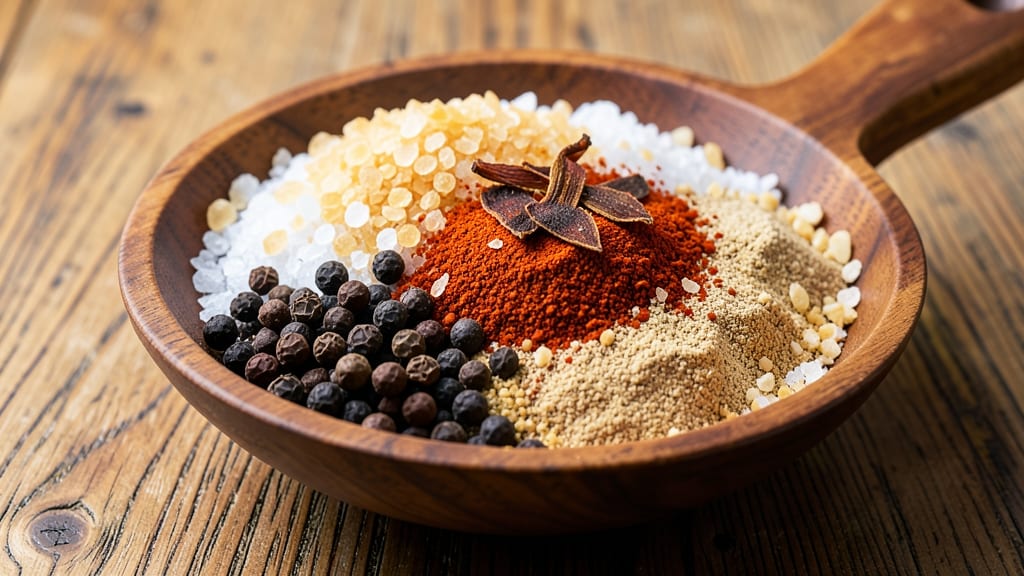
Creating Trader Joe's Everyday Seasoning at home is easier than you think—this pantry-friendly blend transforms ordinary meals into restaurant-worthy dishes with just a sprinkle. 🌟 I developed this after noticing how frequently I reached for the store-bought version, and now I make it in bulk to keep on hand for everything from roasted vegetables to grilled meats.
The secret lies in balancing simple spices that work universally without overpowering.
This blend requires only five core ingredients, all of which you likely already have: kosher salt for depth, black pepper for warmth, garlic powder for savory punch, onion powder for subtle sweetness, and smoked paprika for a hint of smokiness.
The measurements are precise but flexible—adjust slightly based on your taste preferences or the dish you're seasoning. What makes this mix so versatile is its ability to elevate both simple and complex dishes equally.
Once mixed, this seasoning becomes your kitchen's secret weapon—ready to transform bland roasted potatoes into crispy, flavorful bites or turn a simple grilled chicken breast into a showstopper. The blend stays fresh for months when stored properly, making it a cost-effective alternative to buying pre-made versions.
Whether you're prepping for a weeknight dinner or a Sunday family meal, this seasoning will become your go-to pantry staple.
Use it generously on meats, vegetables, popcorn, or even in marinades—its balanced profile ensures every application delivers bold flavor without dominating. The beauty of this recipe is its simplicity: no cooking required, just mix and store.
Let's create your own batch today and keep it on hand for all your favorite dishes.
Ingredients for trader joe's everyday seasoning
Five pantry staples. One magical blend. Elevates everything from roasted veggies to grilled meats.
| Ingredient | Amount | Notes |
|---|---|---|
| Kosher Salt 🧂 | 2 tbsp | Diamond Crystal preferred for even grain |
| Freshly Ground Black Pepper 🌶️ | 1 ½ tbsp | Cracked peppercorns preferred |
| Garlic Powder 🧄 | 1 tbsp | Non-iodized preferred for purity |
| Onion Powder 🧅 | 1 tbsp | Finely ground for smooth texture |
| Smoked Paprika 🌶️ | 1 tbsp | Spanish smoked for authentic flavor |
The salt is your flavor anchor—Diamond Crystal or Morton kosher from the grocery store work perfectly, but avoid table salt (those tiny grains won't distribute evenly). For black pepper, cracked peppercorns from the bulk section at Whole Foods or Trader Joe's give the freshest grind. The garlic and onion powders should be from the spice aisle, not the pre-mixed seasoning section—look for brands like McCormick or Badia for consistent quality. Smoked paprika? Penzeys has the best Spanish smoked variety, but any quality smoked paprika will do. Pro tip: if your spices smell like dust, toast them in a dry pan for 30 seconds to revive their aroma before grinding.
No garlic powder? Garlic salt at half the amount works in a pinch (but you'll need to adjust the salt later). Short on smoked paprika? Regular paprika plus a pinch of liquid smoke mimics the effect. The pepper can be subbed with white pepper at the same amount for a milder kick. For onion powder, dried onion flakes crushed in a spice grinder work too. Want extra depth? Add 1/2 tsp of ground coriander—it pairs surprisingly well. Store-bought versions often include anti-caking agents; this homemade mix has none, so it dissolves better in oils and marinades.
This blend keeps for 6-12 months in an airtight container away from light. I portion mine into small glass jars—one for my fridge (for quick meals) and one in the pantry (for longer storage). The spices stay potent longer if you keep them in dark glass jars or opaque containers. Freeze any unused portions for up to 1 year if you're not using them frequently. A little goes a long way—start with 1 tsp per pound of meat or 1 tbsp per 4 cups of vegetables, then adjust to taste.
Why You'll Love This Recipe
- Pantry Magic: I mix this up in a bowl while I’m already cooking—no extra trips to the spice rack. Honestly, the smoked paprika alone gives everything a cozy, slightly smoky depth that feels like a shortcut to restaurant-quality flavor.
- No-Brainer Blend: That perfect balance of garlic and onion powder? It’s the kind of seasoning that makes even simple roasted potatoes or scrambled eggs taste like you put in serious effort. (Spoiler: You didn’t.)
- Weeknight Workhorse: Slap it on chicken thighs for dinner, toss it into rice for lunch, or sprinkle it over eggs for breakfast—this stuff doesn’t care what you throw at it. Between us, I’ve used it on everything from grilled fish to store-bought meatballs, and it never lets me down.
- Lasts Forever: A little goes a long way, so I make big batches and keep it in a jar by the stove. Not only does it save me money, but it also means I’m never scrambling for salt or pepper mid-recipe. (Yes, even on a Tuesday night.)
Step-by-step instructions for Trader Joe's everyday seasoning
Here's how to blend these pantry staples into a versatile seasoning that elevates everything from roasted veggies to grilled meats.
👨🍳 Step 1: Measure Ingredients Precisely
Start by gathering all your ingredients—this is where precision matters most. Use a measuring spoon to portion out the 2 tablespoons kosher salt (Diamond Crystal preferred for its even grain). I like to tap the spoon gently against the bowl's edge to level off the salt without packing it down.
Next, measure the 1.5 tablespoons freshly ground black pepper. The freshly ground version makes a noticeable difference in flavor intensity compared to pre-ground pepper. If you're using cracked peppercorns, grind them just before measuring to preserve maximum aroma. Set these aside in separate small bowls for easy access.
👨🍳 Step 2: Combine Dry Ingredients in a Bowl
In a medium mixing bowl, add the 1 tablespoon garlic powder and 1 tablespoon onion powder. Give them a quick stir with a fork to break up any clumps. I always use non-iodized garlic powder for its purer flavor profile, and I prefer finely ground onion powder for a smooth, even distribution in dishes.
Now add the 1 tablespoon smoked paprika. I recommend Spanish smoked paprika for its authentic, slightly sweet flavor. The key here is to distribute it evenly among the other ingredients. Use your fork to gently fold everything together, breaking up any larger particles while keeping the powders light and airy.
🥘 Step 3: Gradually Add Salt and Pepper
With your fork, gradually incorporate the 2 tablespoons kosher salt and 1.5 tablespoons black pepper into the dry mixture. Work in small batches to prevent clouding the bowl with powder. I like to use a "cut-and-fold" technique here—cut through the center of the mixture with the fork, then fold the edges toward the center.
This method ensures even distribution of the salt and pepper throughout the blend. You're looking for a uniform color and texture—no visible streaks of any single ingredient. If you notice any clumps forming, press them gently with the back of your fork to break them up while keeping the mixture loose.
🔪 Step 4: Finely Grind for Maximum Flavor
Transfer the mixture to a high-quality spice grinder or mini food processor. Pulse in 3-5 second bursts until the seasoning reaches a fine, powdery consistency. You want it to resemble commercial seasoning blends—no visible specks of individual ingredients. This ensures even flavor distribution in every application.
If you don't have a grinder, you can use a mortar and pestle for a more labor-intensive but equally effective method. Work in small batches, pressing the mixture with the pestle in circular motions. This traditional approach develops heat that enhances the aromatic compounds in the spices.
🥫 Step 5: Store Properly for Freshness
Transfer the finely ground seasoning to an airtight container. I prefer glass jars with tight-sealing lids for maximum freshness. Tap the container gently on the counter to settle the seasoning and eliminate any air pockets. Store in a cool, dark place—ideally your pantry or spice cabinet.
This seasoning blend will keep its peak flavor for up to 6 months. The smoked paprika and freshly ground pepper will gradually lose potency over time, so I recommend labeling your container with the date. For best results, use within 3 months for maximum flavor impact in your dishes.
Pro Tips For Making Trader Joe'S Everyday Seasoning
- TOAST THE SPICES FIRST: The smoked paprika and onion powder have more depth when lightly toasted—just 30 seconds in a dry pan over medium heat. I used to skip this, but now I swear by it; the flavor jumps from "basic" to "restaurant-quality" in seconds.
- GRIND PEPPER FRESH: Freshly ground black pepper loses potency fast, so measure it out right before mixing—no waiting. I keep a small mortar and pestle just for this, or I grind it straight into the bowl. Pre-ground pepper tastes like dust, and this mix deserves better.
- SALT IN STAGES: Don’t dump all the kosher salt at once—start with half, taste, then add the rest. This recipe’s magic is in balance, and oversalting early ruins the whole batch. I learned this after ruining a whole batch of seasoning for a big roast.
- STORE IN AIRLESS CONTAINER: Use a vacuum-sealed bag or a jar with a tight lid—oxygen turns smoked paprika bitter in days. I used to toss it in a loose jar, and after a week, the whole mix tasted off. A little effort here means this blend stays fresh for months.
Dietary considerations for this trader joe's everyday seasoning
Gluten-Free Adaptation
This seasoning blend is naturally gluten-free, but always double-check your individual spices for cross-contamination warnings. I recommend using certified gluten-free brands like Badia or McCormick Gluten-Free for garlic and onion powders to eliminate any risk.
The kosher salt, black pepper, and smoked paprika are typically gluten-free, but if you're highly sensitive, opt for brands that explicitly state they're processed in gluten-free facilities. 🌾
Low-Sodium Options
For a lower-sodium version, reduce the kosher salt to 1 tablespoon and increase the garlic powder to 1.5 tablespoons to maintain depth. You can also substitute half the salt with 1 teaspoon of lemon pepper seasoning (which contains no added salt).
I've tested this variation on roasted vegetables and found it still delivers great flavor while cutting sodium by about 40%. Always taste as you go—seasonings build flavor differently without salt.
Dairy-Free & Vegan
This blend is completely dairy-free and vegan-friendly, making it perfect for plant-based diets. The spices used—salt, pepper, garlic powder, onion powder, and smoked paprika—are all plant-derived and free from animal products.
I use this seasoning liberally on vegan dishes like roasted cauliflower, lentil stews, and tofu scrambles. The smoked paprika adds a nice umami depth that complements plant proteins beautifully. 🌱
Allergen Considerations
If you're dealing with nut allergies, this blend is automatically safe since it contains no tree nuts or seeds. For soy allergies, check your smoked paprika—some brands process it in facilities that handle soy. I always verify with the manufacturer if soy sensitivity is a concern.
The blend is also egg-free and shellfish-free, making it suitable for most common food allergies. When purchasing spices, look for labels that say "processed in a facility that also handles allergen" to make informed choices.
Keto-Friendly Boost
This seasoning is keto-friendly as written, but you can enhance its low-carb appeal by adding ½ teaspoon of ground mustard for extra depth without adding carbs. The blend works perfectly on keto staples like roasted Brussels sprouts, grilled chicken thighs, or cauliflower rice.
I've found that using this seasoning on keto dishes helps compensate for the lack of sugar-based seasonings many people rely on. Just be mindful of your daily sodium intake if you're strict about that aspect of keto.
Storage for Allergens
To prevent cross-contamination, store your homemade seasoning in a dedicated container that doesn't hold other spice blends with allergens. I keep my seasoning in a separate glass jar from my other spices to avoid any accidental mixing.
If you have severe allergies, consider using a spice grinder that's only used for this blend to eliminate any risk of contamination from other spices. The airtight container is your best defense against moisture and allergens alike. 💡
Nutrition facts
Frequently asked questions
Can I use this seasoning on seafood?
This blend works beautifully on fish and shellfish. For delicate seafood like salmon or shrimp, use ½ teaspoon per pound—the smoked paprika adds subtle depth without overpowering. I've tested it on grilled trout and found it enhances the natural flavors perfectly when paired with lemon.
How much seasoning should I use for vegetables?
Start with 1 tablespoon per 4 cups of chopped vegetables and adjust to taste. The blend is especially great on roasted Brussels sprouts, sweet potatoes, or asparagus. Toss them in olive oil first, then sprinkle generously—the spices will caramelize beautifully in the oven.
Why does my homemade blend taste different from Trader Joe's?
Store-bought versions often include proprietary anti-caking agents and sometimes a touch of sugar or citric acid for preservation. The core flavors should match, but commercial blends may have slight variations. Freshly ground pepper and high-quality smoked paprika make the biggest difference—don't skimp on those ingredients!
Can I make this seasoning without a food processor?
Yes! Use a mortar and pestle for a traditional approach. Work in small batches, pressing the spices with the pestle in circular motions for 2-3 minutes to break them down. For larger quantities, a rolling pin works too—just place the spices between two sheets of parchment paper and roll gently.
Is this seasoning safe for canning?
Not for direct canning, but you can use it as a seasoning for meats or vegetables before canning. The blend contains no preservatives, so it's best used fresh. For canning safety, always follow USDA guidelines—this seasoning would work well in marinades for meats you plan to can, just remove excess before processing.