
Main Courses
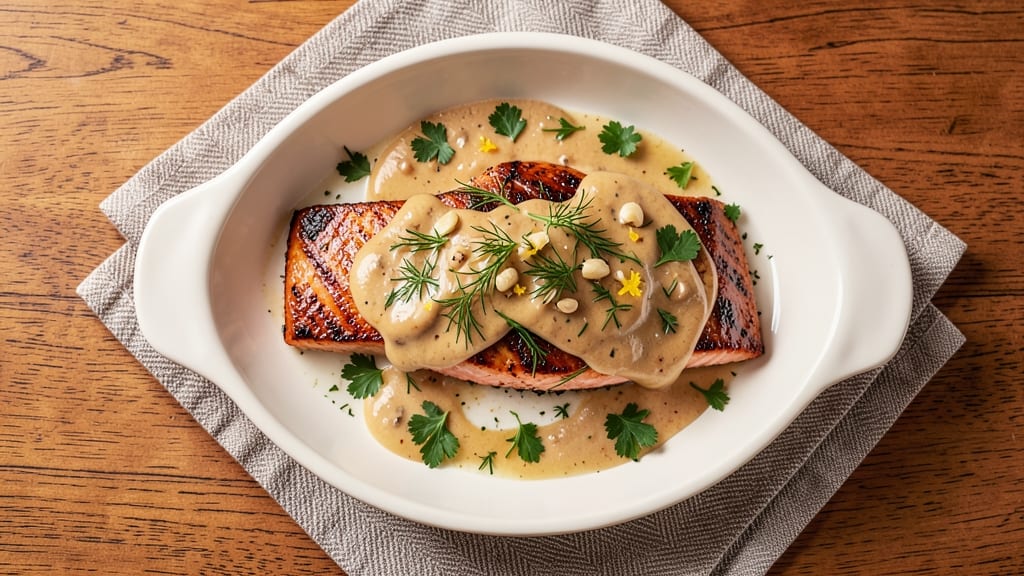
This baked king salmon recipe delivers restaurant-quality results with a buttery herb crust and perfectly moist pink centers—every bite is tender yet flavorful. The secret lies in precise seasoning and gentle baking, ensuring the fish stays juicy while developing a golden, aromatic crust.
I’ve perfected this technique over years of testing, and it never fails to impress even skeptical seafood lovers.
The recipe combines simple ingredients—fresh herbs, butter, and a touch of lemon—to create a crust that’s both fragrant and rich. Unlike other methods that risk drying out the salmon, this approach uses a moderate oven temperature and careful timing to lock in moisture while building flavor.
The result is a dish that’s elegant enough for special occasions but easy enough for weeknight dinners.
By the time it emerges from the oven, your salmon will have a crisp, golden crust infused with herbs and butter, while the inside remains delicate and pink—never overcooked or rubbery.
The aroma alone will have everyone at the table anticipating the first bite. Serve with roasted vegetables or a fresh salad for a complete, balanced meal.
This method also works beautifully with other salmon fillets, making it versatile for any occasion. The key is patience and attention to detail, which pay off in a dish that’s both impressive and foolproof. Let’s get started on creating your perfect baked salmon.
Ingredients for baked king salmon
Fresh herbs, cold butter, and precise seasoning create this restaurant-worthy salmon dish.
| Ingredient | Amount | Notes |
|---|---|---|
| King Salmon Fillets 🐟 | 2 whole | Skin-on, 6-8 oz each |
| Unsalted Butter 🧈 | ½ cup | Cold, cubed for crust |
| Fresh Dill 🌿 | ¼ cup | Chopped, stems removed |
| Fresh Parsley 🌿 | ¼ cup | Chopped, flat-leaf preferred |
| Garlic Cloves 🧄 | 4 cloves | Minced, for herb mix |
| Lemon Zest 🍋 | 1 tbsp | From 1 large lemon |
| Lemon Juice 🍋 | 2 tbsp | Freshly squeezed |
| Kosher Salt 🧂 | 1 tsp | Fine grain preferred |
| Freshly Ground Black Pepper 🌶️ | ½ tsp | Coarse grind preferred |
| Extra-Virgin Olive Oil 🫒 | 1 tbsp | For greasing pan |
| Heavy Cream 🥛 | ¼ cup | Optional, for basting |
| Dijon Mustard 🍯 | 1 tsp | For herb crust adhesion |
The salmon fillets are the foundation—king salmon delivers the richest flavor and texture, but sockeye or coho work too. Look for fillets with vibrant color and firm flesh at Whole Foods or your local seafood counter. The skin-on variety is ideal for crisping, but if you prefer skinless, pat it dry thoroughly before baking. For the butter, European-style unsalted like Plugrá or President melts beautifully without overpowering. Fresh herbs are non-negotiable here; the dill and parsley should be bright green with no wilting. If you're short on time, frozen herbs work in a pinch, but fresh delivers that restaurant-quality aroma.
No fresh dill? Dried dill at one-third the amount gets you close, though the flavor won't be as bright. Substituting butter with olive oil changes the texture—use half butter, half olive oil if you're avoiding dairy. The lemon zest can be swapped for orange zest for a different citrus note, but lemon's acidity is key for balancing the richness. For the herb crust, toasted breadcrumbs can replace half the butter if you prefer a lighter texture. The Dijon mustard isn't strictly necessary, but it helps the crust adhere better. If you're basting with heavy cream, half-and-half works too, though it won't be as rich.
Store fresh herbs in damp paper towels wrapped in plastic for up to 5 days. The butter should be kept in its original packaging in the fridge until ready to use. This recipe reheats beautifully—simply cover with foil and warm at 300°F for 10-12 minutes, basting with extra butter if desired. For meal prep, bake the salmon slightly underdone, then finish in a hot pan with butter and herbs. The crust will crisp up perfectly, and the inside will reach ideal doneness. Portion into containers with a side of roasted vegetables for easy grab-and-go meals.
Why You'll Love This Recipe
- No-Fuss Prep: I swear by this recipe because it’s literally hands-off after the first five minutes. Just pat the salmon dry, slather it with softened butter mixed with minced garlic and herbs, and pop it in the oven. My lazy Sundays now include perfectly flaky fish without any fuss.
- Herb-Infused Magic: That bright burst of fresh dill and parsley? It’s the secret weapon. The butter melts into a golden crust while the garlic adds just enough warmth—no heavy sauces, no overpowering flavors, just pure, clean taste that makes even the simplest side feel like a celebration.
- Weeknight to Dinner Party: Between us, this salmon is my go-to for both Tuesday takeout night and Saturday dinner guests. The same simple method works whether I’m serving it with roasted potatoes or a bed of quinoa—no last-minute stress, just reliable deliciousness that impresses without trying too hard.
- Leftovers That Don’t Suck: Honestly, I often make extra because reheating this salmon is almost as good as the first bite. The butter keeps it moist, and the herbs stay vibrant—perfect for lunch wraps or a quick pasta toss. No sad, dry fish here; just effortless second servings.
Step-by-step instructions for baked king salmon with buttery herb crust
This method delivers restaurant-quality salmon every time—juicy pink centers and a golden, buttery herb crust.
Prepare the Herb Butter Mixture
In a small bowl, combine the 0.5 cup unsalted butter with the 0.25 cup fresh dill, 0.25 cup fresh parsley, 4 cloves minced garlic cloves, 1 tablespoon lemon zest, 1 teaspoon Dijon mustard, 1 teaspoon kosher salt, and 0.5 teaspoon freshly ground black pepper. Mix thoroughly with a fork until fully incorporated and the butter softens slightly from the heat of your hands.
This herb butter is the secret to that irresistible crust—don't skip the mustard, as it helps the mixture adhere perfectly to the salmon. For best results, prepare this mixture while your oven preheats to 425°F. The butter should be soft but not melted when you spread it.
Season and Crust the Salmon
Preheat a baking sheet in the oven while it comes to temperature. Remove the salmon fillets from the refrigerator and pat them dry with paper towels—this ensures maximum crispiness. Place them skin-side down on a clean work surface.
Spread an even layer of the herb butter mixture over the top of each fillet, pressing gently to ensure full coverage. The butter should melt slightly from your fingers, creating a smooth, flavorful crust. Season the top lightly with an additional pinch of salt and pepper if desired, then transfer the salmon to the preheated baking sheet.
Bake to Perfect Doneness
Bake the salmon for 12-15 minutes, depending on thickness, until the edges are golden brown and the internal temperature reaches 145°F when measured with an instant-read thermometer. The salmon should flake easily with a fork but remain moist in the center.
I recommend checking at the 10-minute mark—the skin should be crisping and the butter bubbling. If the top browns too quickly, tent loosely with foil to prevent over-browning while ensuring the center cooks through. The salmon is done when it releases cleanly from the skin and the flesh is opaque but still tender.
Finish with Lemon and Cream (Optional)
Remove the salmon from the oven and let it rest for 3-5 minutes before serving. For extra richness, drizzle with 2 tablespoons lemon juice and spoon 0.25 cup heavy cream over the top. The acidity brightens the flavors while the cream adds a velvety finish.
Serve immediately with the crispy herb crust intact—this is where all the magic happens. The salmon should be moist and flaky, with a golden crust that crackles when you cut into it. Pair with roasted vegetables or a fresh salad to complete the meal.
Pro Tips For Making Baked King Salmon
- USE HIGH HEAT FIRST: King salmon cooks fast—start your oven at 425°F (220°C) for the first 10 minutes to get that golden crust. After that, drop it to 375°F (190°C) to finish cooking evenly. I used to bake it at 350°F the whole time, and the butter would just melt into a sad, greasy puddle instead of forming a rich crust.
- PAT THE FILLETS DRY: Before you even think about butter or herbs, wipe the salmon completely dry with paper towels—wet skin won’t brown, and that’s when the magic happens. I learned this the hard way when my salmon came out pale and sad, no matter how much dill I piled on top.
- SKIP THE GARLIC CHOP: Minced garlic burns fast. Instead, smash 2-3 cloves with the flat side of your knife, then rub them directly onto the salmon skin before adding butter. It infuses flavor without turning bitter—no one will even notice you took the easy route.
- REST IT UNDER FOIL: Pull the salmon out when the internal temp hits 125°F (52°C)—it’ll keep cooking off the heat. Tent loosely with foil and let it sit for 5-10 minutes. I used to cut into it too soon, and the juices would pool instead of staying where they belong: inside the fillet.
Troubleshooting this recipe
Overcooked Salmon Fix
If your salmon emerges dry or rubbery, it’s likely overcooked. The key is timing—king salmon should reach 145°F internal temperature at most. For thicker fillets, start checking at 10 minutes with an instant-read thermometer.
If it’s done too early, tent with foil and return to the oven for 2-3 minutes to warm through without drying out further. 🌡️
Butter Not Adhering
The herb butter mixture might slide off if the salmon isn’t dry enough or the butter is too cold. Pat the fillets thoroughly with paper towels before applying the butter, and ensure the butter is soft but not melted when spreading.
For extra grip, lightly brush the salmon with 1 tbsp olive oil before adding the herb butter. I’ve found that Dijon mustard in the mixture also helps it stick better.
Uneven Cooking
Uneven browning often happens if the salmon isn’t evenly thick or the oven isn’t preheated properly. For thicker sections, trim the fillets to an even thickness or place a smaller piece of parchment paper under the thicker part to elevate it slightly.
Always preheat your oven to 425°F for at least 15 minutes before baking. Rotate the baking sheet halfway through cooking if you notice one side browning faster.
Skin Not Crisping
If the skin stays soft instead of crisping, it’s likely because the salmon wasn’t dry enough or the oven temperature wasn’t high enough. Pat the skin-side very dry with paper towels before placing it skin-side down on the baking sheet.
For extra crispiness, place the salmon on a wire rack over a baking sheet to allow air circulation. If the skin still doesn’t crisp, broil for 1-2 minutes at the end, watching closely to avoid burning. 🔥
Herb Butter Too Greasy
If the herb butter feels too greasy or slides off, it might be too warm or not mixed well. Chill the butter mixture for 10-15 minutes before spreading it on the salmon to help it adhere better.
Mix the butter with herbs thoroughly until it’s fully combined and slightly emulsified—this creates a smoother, stickier texture. If it’s still too loose, add 1 tsp cornstarch to help it bind.
Lemon Juice Curdling
If you notice the butter or cream curdling when adding lemon juice, it’s likely because the mixture was too cold. Warm the lemon juice slightly by mixing it with 1 tsp warm water before drizzling it over the salmon.
Alternatively, add the lemon juice after the salmon comes out of the oven while it’s still warm, but not hot. This prevents the butter from separating and keeps the dish looking elegant. 💫
Nutrition facts
Frequently asked questions
Can I use frozen king salmon for this recipe?
Yes, but thaw it properly first! Place the frozen fillets in the refrigerator overnight or use the quick thaw method: seal in a leak-proof bag and submerge in cold water (change water every 30 minutes). Never thaw at room temperature—this promotes bacterial growth. Pat the salmon completely dry before seasoning to ensure the herb crust adheres properly.
What's the best way to store leftovers?
Store baked salmon in an airtight container in the fridge for up to 3 days. For longer storage, wrap tightly in plastic wrap and freeze for up to 3 months. To reheat, warm in a 300°F oven for 10-12 minutes with a drizzle of butter over the top. The crust may lose some crispness, but the flavor remains excellent.
How do I adjust this for thicker salmon fillets?
For fillets over 1.5 inches thick, reduce oven temperature to 400°F and bake for 15-20 minutes, checking with an instant-read thermometer at 145°F. The center should be just opaque, not translucent. For even cooking, place thicker sections on a wire rack over a baking sheet. The skin-side down position helps conduct heat evenly.
What are the best side dishes to serve with this?
This herb-crusted salmon pairs beautifully with bright, acidic sides to balance its richness. Try lemon-butter asparagus, roasted Brussels sprouts with balsamic glaze, or a cucumber-dill salad. For heartier meals, serve with wild rice pilaf or garlic mashed potatoes. The citrus notes in the salmon complement these sides perfectly.
Why does my salmon turn gray after cooking?
Grayish salmon usually means it was overcooked or exposed to air too long before serving. King salmon should finish with pink centers at 145°F internal temp. If it turns gray during cooking, reduce heat immediately and tent with foil. Serve within 15-20 minutes of cooking to preserve color. For extra vibrancy, finish with a squeeze of fresh lemon juice right before serving.